



- Room 1807, Unit 9, Building 2, Shangxing Commercial Street, Shangde Road, Shangxing Community, Xinqiao Subdistrict, Bao'an District, Shenzhen City, China
CONTACT US

WhatsApp


Contact Us
Our team is on stand by, waiting toassist you.

Videos
A large collection of educational videos and tutorials.

About Us
Learn about our company, leadership, and mission totransform manufacturing.

Privacy Policy
Applies to all personal information collected through and/or processed in connection.
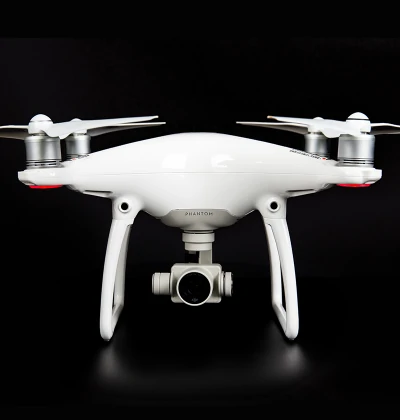

Aerospace & UAV
WJ Prototypes is your 3D manufacturing partner from prototype to large scale production.

Consumer Electronics
New Product Introduction Solutions for Consumer Electronics.

Robotics & Automation
Need some assistance bringing your robotic device or parts from the sketch-board to reality?

Medical Devices
The medical industry needs high quality, dependable and safe parts and products.

Automotive
New Product Introduction Solutions for Automotive

Industrial Machinery
The main purpose of industrial prototyping is to take the product from drawings into the real world.
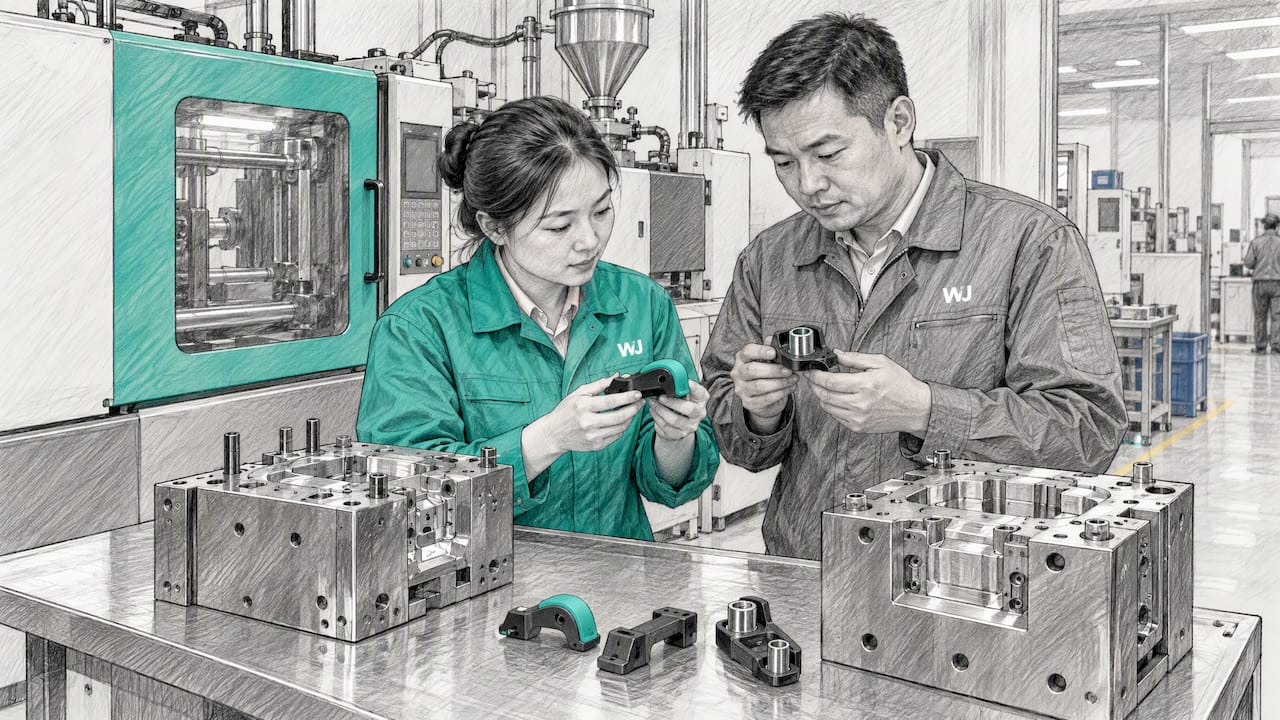
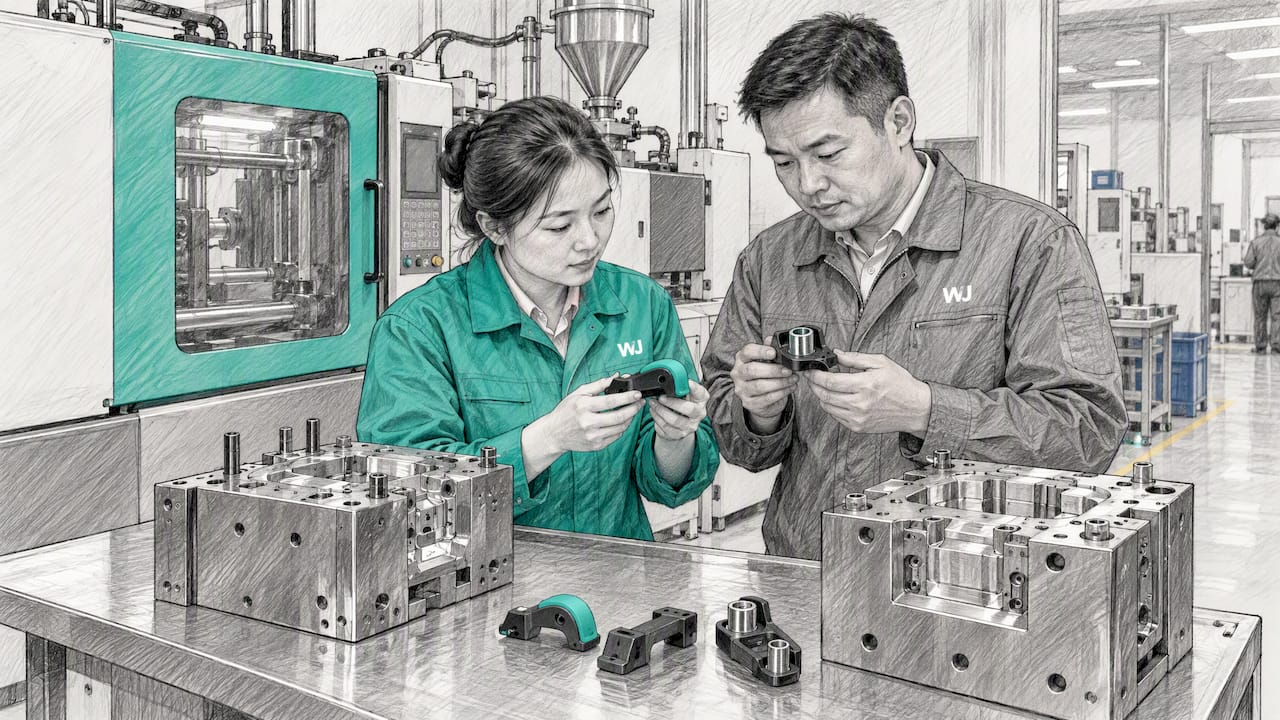
If your part needs a soft-touch grip, a sealed cosmetic surface, or a high-volume run of rubberized housings, overmolding is the default choice. If you’re embedding metal threads, structural inserts, or electrical contacts, or you’re running low volumes where tooling cost matters more than cycle speed, insert molding usually wins. In Chinese production, the right call also depends on whether your supplier actually runs multi-shot presses or relies on manual insert placement, so we validate both before committing to a full build.
TL;DR:
- Overmolding is ideal for soft-touch, sealing, or tactile applications, but requires proper surface preparation and mechanical interlocks for strong bonding.
- Insert molding is preferable for low-volume runs with metal or electrical inserts, emphasizing insert cleanliness and surface grooves for better mechanical interlocks.
- Both processes should undergo a pilot test, with strict handling, dimensional, and adhesion checks, to prevent bond failures in production.
- Two-shot overmolding involves higher upfront tooling costs but offers faster cycle times at high volumes, while insert molding has lower tooling costs but longer cycle times.
- Confirm supplier capabilities, surface cleanliness, and adhesion testing procedures before proceeding, especially considering long lead times and process-specific conditions.
Overmolding bonds a second material, typically a thermoplastic elastomer (TPE), onto a rigid substrate like ABS, polycarbonate, or nylon. There are two main workflows: two-shot (or multi-shot) molding, where a single press injects both materials sequentially using rotating or shuttle tooling, and insert overmolding, where a pre-molded substrate is manually or robotically placed into a mold before the second shot.
Two-shot molding needs a multi-barrel injection press and indexed tooling, which raises upfront cost but cuts labor and cycle time once running. Bond strength depends heavily on melt temperature, substrate surface preparation, and mechanical interlocks machined into the substrate, according to Avient’s overmold design guide. Preheating the substrate can improve adhesion for some materials, but the same guide flags it as a poor practice for nylon substrates, where it can cause warping instead of better bonding.
Soft-touch power tool grips, sealed remote control housings, and medical device buttons are classic overmolding applications because the process adds a tactile or sealing layer without a separate assembly step, as Formlabs explains in its process comparison.
Pro Tip: Ask your mold maker for a pyrometer reading on actual melt temperature during a trial shot, not just the setpoint on the machine display.
Insert molding places a pre-formed component, usually metal, but sometimes a molded plastic or electrical contact, into a mold cavity, then shoots a single material over or around it. Unlike two-shot overmolding, this typically runs on a conventional single-shot press, which is one reason Avient’s design guide notes that insert molding often carries lower tooling costs than multi-shot overmolding.
The workflow starts with insert cleaning and inspection, since oil, oxidation, or burrs on a metal insert will undermine the bond regardless of how good the mold is. Inserts are then placed by hand or by a pick-and-place robot, the mold closes, and the shot encapsulates the insert. Parts cool, eject, and move to inspection, where pull-tests or torque-tests confirm the insert hasn’t shifted or loosened.
Insert molding is the natural fit for embedded threaded fasteners, structural brackets, and electrical connectors, where a pure overmold wouldn’t provide the mechanical or conductive properties the part needs.
Pro Tip: Request sample photos of insert placement mid-cycle, not just finished parts, to confirm your supplier’s process matches what they quoted.
Both processes eliminate a secondary assembly step, which is their main appeal, but both also introduce a single point of failure at the bond line between materials. A loose insert or a delaminated TPE layer fails the same way a bad weld fails: quietly, until the part is in the customer’s hands.
The two processes diverge most sharply on equipment, tooling investment, and achievable volume. Two-shot overmolding needs a multi-barrel press and indexed tooling, both of which cost more upfront but run faster per cycle once tooling is amortized. Insert molding can run on standard single-shot presses, which keeps tooling costs lower but adds labor time for insert placement unless you’re paying for robotic automation.
For a deeper breakdown of how tooling costs scale with order size, see our guide to injection molding prototype costs in China.
Picking the right process matters less than picking a supplier who can actually run it well. These are the checks worth putting in every RFQ.
Communication lag across time zones and holidays is a real cost in China-based sourcing, so build buffer into your lead-time expectations rather than assuming a quoted cycle time includes shipping and customs clearance. If your part includes metal components that need part numbers or serial marking, engraving and marking guidance for manufacturing tools is worth reviewing alongside your insert spec.
Pro Tip: Put your acceptance criteria for adhesion and placement tolerance in writing before the trial run, not after you see the results.
As a rule of thumb: high-volume cosmetic parts lean toward two-shot overmolding, structural or electrically functional inserts lean toward insert molding, and anything in between deserves a side-by-side quote on both.
Injection molding, prototyping, and quality assurance should be conducted under ISO-certified processes, ensuring that every overmolding or insert molding project goes through documented inspection before full production.
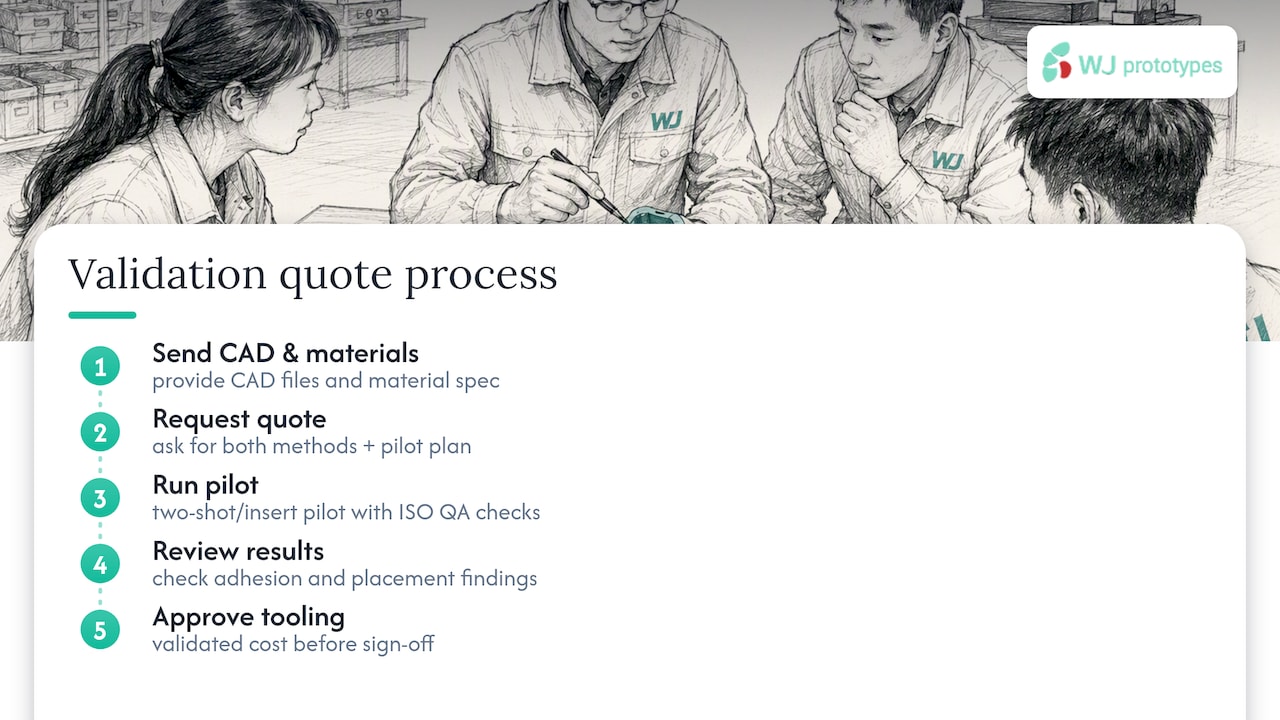
A typical validation sequence includes trial material pairing, a pilot run, sample inspection, and sign-off, often completed in a short timeframe. For an example procedural checklist, see how to validate overmolding in China in two weeks.
Favor two-shot overmolding for high-volume cosmetic, soft-touch parts. Use insert molding when structural inserts or low-run economics matter more than cycle speed. Always require a pilot adhesion test, and negotiate resin pre-batching for long color runs.
— Nas
Whichever method fits your part, we quote both and run a pilot before you commit to full tooling. Our Injection Molding Service covers two-shot overmolding, insert molding, and the ISO-driven QA checks that catch adhesion or placement problems before they reach your production run. Send us your CAD files and material spec, and ask for a pilot adhesion test plan alongside your quote so you know exactly what a full run will cost before you sign off on tooling.
Insert molding typically carries lower tooling costs than multi-shot overmolding, since it can run on conventional single-shot presses rather than requiring multi-barrel tooling, according to Avient’s design guide. This makes it the more economical choice for most low-volume production runs.
You can, but preheating the nylon substrate to improve adhesion is discouraged, since it tends to cause warping rather than a stronger bond. Adhesion on nylon depends more on surface preparation, mechanical interlocks, and correct melt temperature during the shot.
Delamination usually traces back to incorrect melt temperature, poor substrate surface preparation, or inadequate mechanical interlock design between the materials. Plastics Technology’s guidance on hard-soft adhesion points to venting and material pairing as additional levers for reducing the risk.
Yes, our Injection Molding Service covers both two-shot overmolding and insert molding builds, supported by ISO-certified quality assurance and design-for-manufacturability review before tooling is cut.
A validation sequence covering material pairing trials, a pilot run, and sample inspection can typically be compressed into a short window of about two weeks. The exact timeline depends on part complexity and whether tooling adjustments are needed after the first trial shot.
SERVICES
RESOURCES