



- Room 1807, Unit 9, Building 2, Shangxing Commercial Street, Shangde Road, Shangxing Community, Xinqiao Subdistrict, Bao'an District, Shenzhen City, China
CONTACT US

WhatsApp


Contact Us
Our team is on stand by, waiting toassist you.

Videos
A large collection of educational videos and tutorials.

About Us
Learn about our company, leadership, and mission totransform manufacturing.

Privacy Policy
Applies to all personal information collected through and/or processed in connection.


Aerospace & UAV
WJ Prototypes is your 3D manufacturing partner from prototype to large scale production.

Consumer Electronics
New Product Introduction Solutions for Consumer Electronics.

Robotics & Automation
Need some assistance bringing your robotic device or parts from the sketch-board to reality?

Medical Devices
The medical industry needs high quality, dependable and safe parts and products.

Automotive
New Product Introduction Solutions for Automotive

Industrial Machinery
The main purpose of industrial prototyping is to take the product from drawings into the real world.

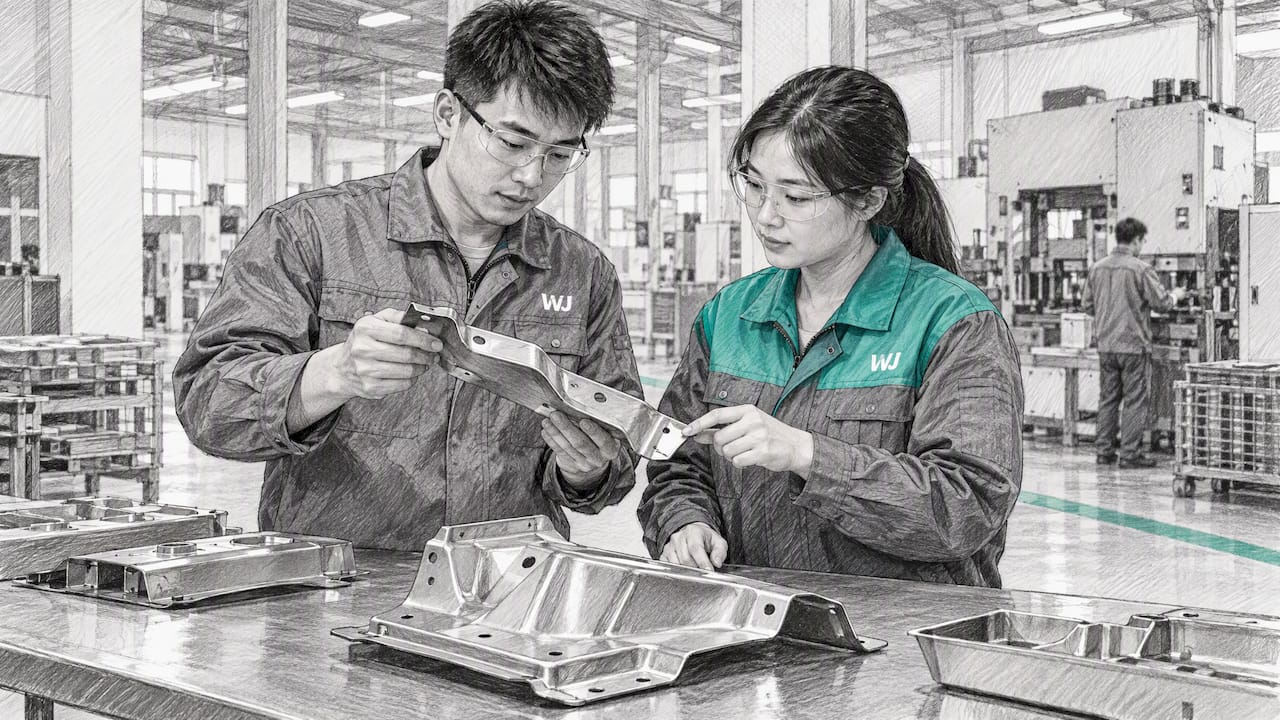
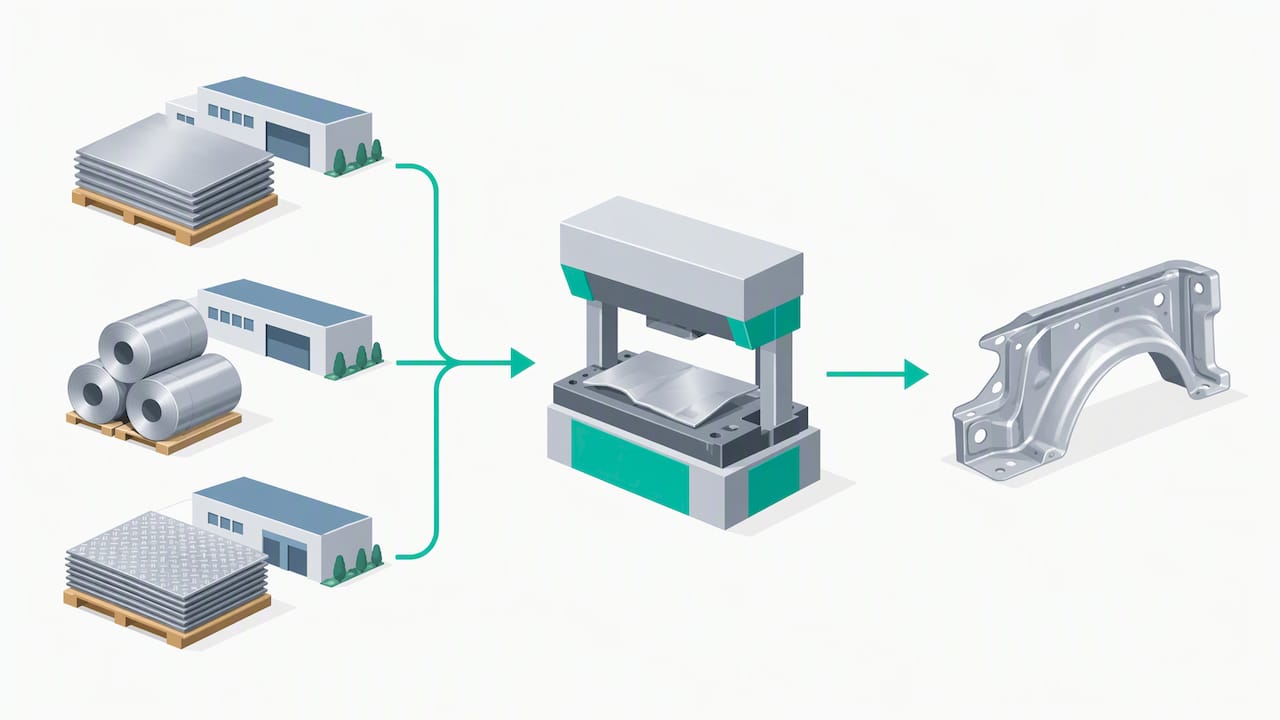
Specialized sheet metal forming for precision automotive parts comes from three main sources: precision metal stampers with high-tonnage presses, contract manufacturers that own in-house tool and die operations, and prototyping-to-production partners such as WJ Prototypes that cover prototyping through low-to-medium-volume runs. Look for a provider that offers stamping, roll forming, hot stamping, and hydroforming alongside in-house tooling and design-for-manufacturing support.
Choosing a sheet metal forming partner with in-house capabilities and strict quality control is essential for producing precise automotive parts efficiently.
| Point | Details |
|---|---|
| Match process to part geometry | Select forming methods like cold stamping or roll forming based on part shape, size, and batch volume. |
| Verify supplier capabilities | Ensure the supplier can handle materials, tolerances, surface finishes, and secondary operations required for your parts. |
| Request sample parts and inspections | Always obtain initial samples or first article inspection data to confirm quality before full production. |
| Consider tooling ownership and lead times | Clarify who owns the tooling and what lead times are involved to avoid delays and unexpected costs. |
| We rely on WJ Prototypes for low-volume prototyping and initial testing, ensuring designs are validated before high-volume tooling. | WJ Prototypes offers rapid quotes, material options, and first article inspections for efficient prototyping and low-volume runs. |
Automotive engineers choose a forming process based on part geometry, material, and batch size, and each method brings its own tooling and cost profile.
Cold stamping covers single-stage, progressive, and transfer operations, and remains the backbone of automotive production because it handles everything from simple brackets to complex panels depending on press tonnage and die design. Roll forming produces continuous profiles like rails and trim at long lengths, making it the natural choice when a part’s cross-section stays constant over its run. CNC press brake bending gives engineering teams flexibility for low-volume parts and prototypes, since it avoids the lead time and cost of a dedicated die. Deep drawing and hydroforming create complex three-dimensional shapes, such as fuel tanks or structural nodes, though wall thickness and draw depth limits still apply. Hot stamping, also called press hardening, shapes ultra-high-strength steel (UHSS) while it is heated, cutting weight without sacrificing crash performance, but it demands specialized furnaces and tighter process controls than cold forming.
Autokiniton documents extensive cold stamping capacity up to 4,500 tons alongside roll forming and hot stamping lines, illustrating the scale a high-volume stamping supplier typically carries.
Matching a part type to the right forming process saves engineering time and avoids costly tooling mismatches later in a program.
Each category carries its own tolerance expectations, and a part that mixes forming with secondary machining or welding needs a supplier comfortable managing both steps under one quality plan.
Picking the right partner comes down to a short list of technical and commercial questions that engineering and procurement teams should answer before committing to a program.
Pro Tip: Ask for written design-for-manufacturing (DFM) feedback and an iterative prototype plan up front, since catching geometry or draft-angle issues before tooling cuts reduces both cost and schedule risk.
Quality documentation separates suppliers who can support a serious automotive program from those who cannot.
One common checkpoint buyers request is tensile and hardness testing on formed material, since these results confirm that a stamped or hot-stamped part retains the mechanical properties the design calls for. Programs exchanging controlled technical data with a supplier should also confirm cybersecurity practices consistent with NIST SP 800-171, which governs how sensitive drawings and specifications should be handled.
We offer sheet metal fabrication alongside CNC machining and rapid prototyping, which lets us carry a formed part from a first sample through low-to-medium-volume production under one quality system. We maintain documented process control that automotive engineering teams expect to see before they commit drawings to a new supplier.
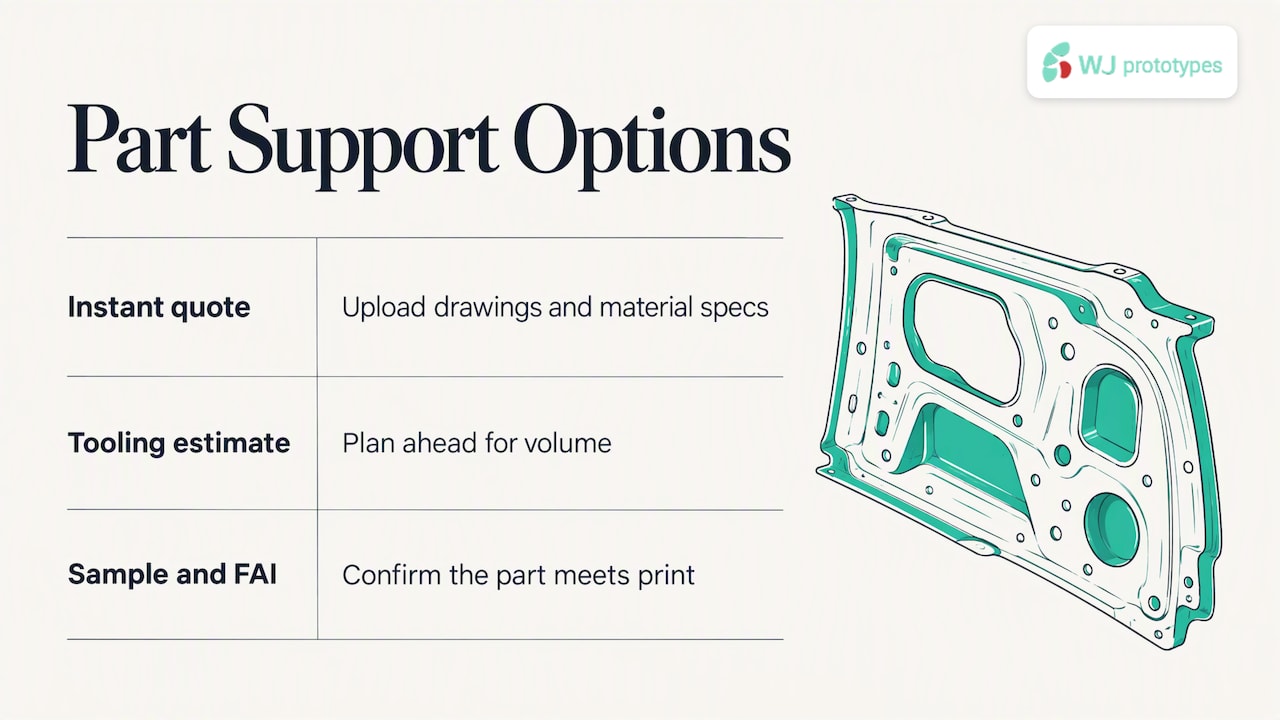
For engineering teams starting a new program, the practical next steps are straightforward: submit drawings and material specifications, request a tooling quote if production volume is likely, and ask for a sample or first article inspection run before committing to a full batch. Our precision sheet metal guide covers tolerance and finish expectations in more detail for teams refining a design.
The shift toward aluminum and UHSS in automotive design is not slowing down, and it changes what a forming supplier needs to offer. A press that handled mild steel for a decade may not be tooled or controlled tightly enough for hot-stamped UHSS, so asking about process controls matters as much as asking about tonnage.
My honest view is that engineering teams who fold tool and die design into DFM conversations early, rather than after a design freeze, consistently avoid the costliest surprises: cracked draws, spring-back, and missed tolerances that only show up once steel hits the press. For a first-run part or a program still finding its production volume, a prototyping partner with fast quoting beats locking into a high-volume domestic stamp shop before the design has settled. Once volumes and geometry stabilize, moving to dedicated progressive tooling makes more sense.
— Nas
If your next automotive part needs forming support without the overhead of committing to full production tooling first, we make it simple to test the design before scaling it. Upload your drawings and material specs through our sheet metal fabrication page for an instant quote, request a tooling estimate if you are planning ahead for volume, or ask for a sample and FAI run to confirm the part meets print before you commit further. Teams managing maintenance and uptime across a broader production floor may also find value in reviewing CMMS case studies on planning preventive maintenance around new tooling investments.
Cost depends heavily on material, gauge, part complexity, tooling needs, and batch size, so there is no single industry-wide figure. Getting an accurate number requires submitting a drawing and specification for a quote, since tooling amortization and secondary operations change the price per part significantly.
Fabricators generally price by project scope rather than a flat hourly rate, factoring in material cost, machine time, tooling, and finishing into a per-part or per-batch quote. Submitting drawings through an instant online quoting system, like the one we use for sheet metal fabrication, is the fastest way to see how these factors combine for a specific part.
Metal shaping in sheet metal work is generally called forming, which covers processes like stamping, bending, roll forming, deep drawing, and hydroforming. Each process shapes flat stock into a finished geometry using different tooling and force applications.
Cold stamping, particularly progressive and transfer die stamping, remains the standard for high-volume panels and brackets because it balances speed with repeatable tolerances. Hot stamping is chosen instead when the part uses ultra-high-strength steel and needs the added strength that comes from forming while heated.
Procurement teams should confirm material and gauge capability, request sample parts or FAI data, and clarify the tooling strategy, including who owns the dies and what lead time to expect. Quality documentation such as ISO 9001 certification and automotive program controls like APQP or PPAP also indicate whether a supplier can support a tiered automotive supply chain.
SERVICES
RESOURCES