



- Room 1807, Unit 9, Building 2, Shangxing Commercial Street, Shangde Road, Shangxing Community, Xinqiao Subdistrict, Bao'an District, Shenzhen City, China
CONTACT US

WhatsApp


Contact Us
Our team is on stand by, waiting toassist you.

Videos
A large collection of educational videos and tutorials.

About Us
Learn about our company, leadership, and mission totransform manufacturing.

Privacy Policy
Applies to all personal information collected through and/or processed in connection.
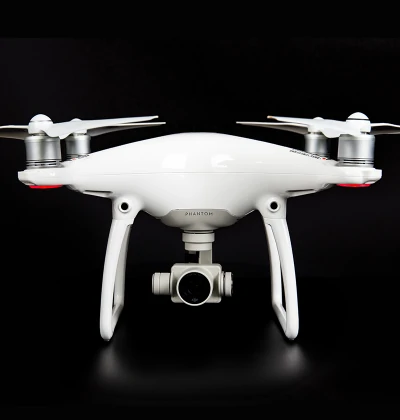

Aerospace & UAV
WJ Prototypes is your 3D manufacturing partner from prototype to large scale production.

Consumer Electronics
New Product Introduction Solutions for Consumer Electronics.

Robotics & Automation
Need some assistance bringing your robotic device or parts from the sketch-board to reality?

Medical Devices
The medical industry needs high quality, dependable and safe parts and products.

Automotive
New Product Introduction Solutions for Automotive

Industrial Machinery
The main purpose of industrial prototyping is to take the product from drawings into the real world.
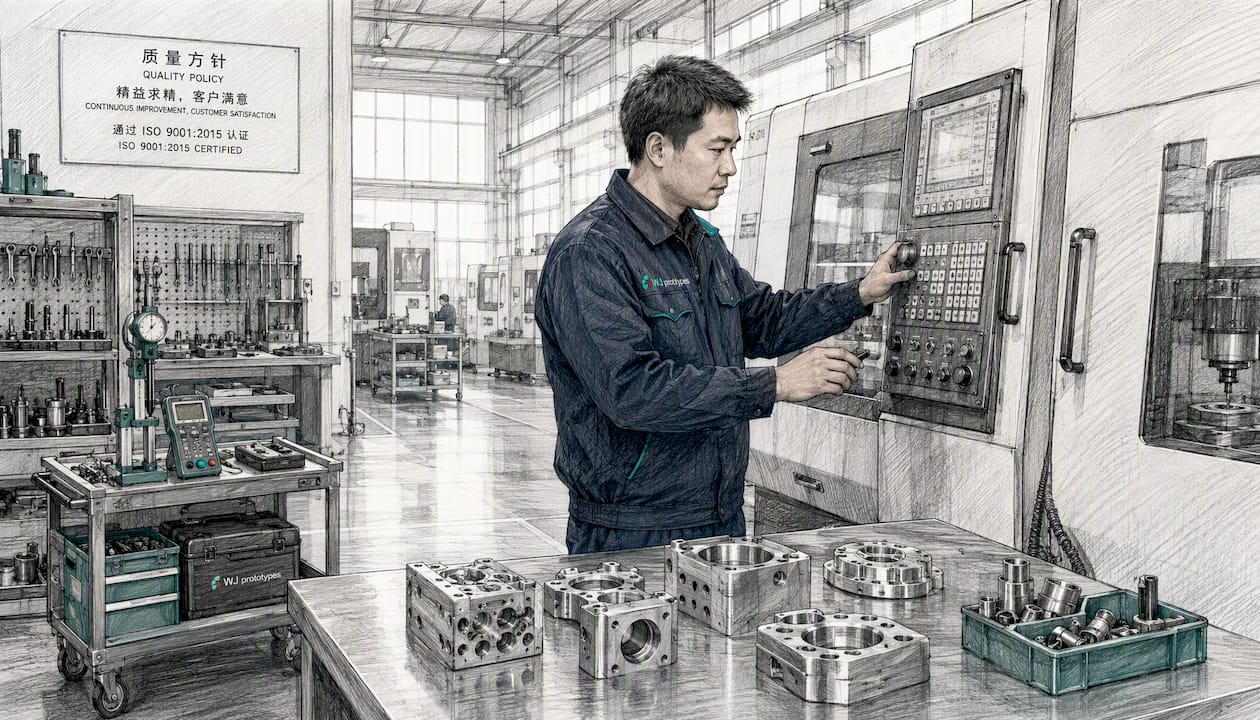

TL;DR:
- WJ Prototypes offers ISO-certified, affordable CNC prototyping from China with instant online quoting and US shipping options. They provide documented inspection reports, a wide range of materials, and up to five-axis machining for reliable, high-quality parts. Their services suit early prototypes, tight-tolerance components, and rapid turnaround needs for US engineering teams.
For US product developers who need reliable, affordable CNC prototyping from China, WJ Prototypes is the vetted, ISO-certified pick. They offer instant online quoting, 3/4/5-axis machining, documented inspection reports, and direct shipping to the US. If you need a quote today, that’s where to start.
The broader shortlist breaks down by supplier type:
Quick signals before you commit to any supplier:
Not all affordable CNC services in China are built the same. The table below maps the four main supplier types against the dimensions that matter most to US engineering teams.
| Supplier Type | Price Signal | Prototype Lead Time | MOQ / Small-Run | Materials | Typical Tolerance | CNC Capabilities | Certifications / QC | Best For | US Shipping Options |
|---|---|---|---|---|---|---|---|---|---|
| Factory-direct rapid-quote platform (e.g., WJ Prototypes) | Mid-low; transparent online pricing | 3–7 business days | 1 piece; per-part cost higher at very low volumes | Metals (aluminum, steel, titanium, brass) + engineering plastics | ±0.01–0.05 mm | 3, 4, 5-axis milling; turning | ISO 9001; CMM reports; material certs | Prototypes needing documented QC and reliable repeat orders | DHL/FedEx express; air freight; sea freight |
| Broker marketplace | Variable; depends on matched factory | 5–10 business days | 1–5 pieces typical | Broad, factory-dependent | Factory-dependent | 3-axis standard; 5-axis varies | Varies; marketplace may not verify | Price comparison across factories | Marketplace-arranged; varies |
| Specialist prototype house | Mid-high | 3–5 business days | 1 piece | Metals, plastics, composites | ±0.005–0.01 mm | 3, 4, 5-axis; EDM; Swiss turning | ISO 9001 or AS9100; full CMM | Tight-tolerance, complex, or customer-facing parts | Express air standard |
| Low-cost small shop | Lowest | 5–15 business days | 1–10 pieces | Common metals and plastics | ±0.05–0.1 mm | 3-axis primarily | Photo inspection; key-dimension checks | Early-stage fit/form checks; non-critical parts | Varies; often slower freight |
A few tradeoffs worth flagging. The lowest price rarely comes with the most complete inspection package. ISO-focused shops typically provide CMM measurement reports and material certificates as standard; lower-cost shops may offer only photographic inspection and spot-dimension checks. For a first-article prototype where you’re validating geometry, that may be fine. For a pre-production run where you need Cpk data, it isn’t.

Instant-quote portals with AI-assisted pricing engines commonly return initial prices within 24 hours when CAD and specs are complete, which compresses the quoting cycle significantly compared to manual RFQ processes.
If you have one overriding constraint, here’s where to focus.
Lowest cost per part: A low-cost small shop or factory-direct portal with no-frills inspection. Relax cosmetic finish requirements, choose common alloys (6061 aluminum, 304 stainless), and batch multiple parts into one order. Factory-direct models can remove marketplace markups and offer more predictable pricing, though they may have less quoting flexibility for unusual geometries.

Fastest prototype turnaround: Rapid-quote platforms with dedicated prototype cells. Many instant-quote portals offer 1–3 day lead times on simple parts, with higher costs for rush service or complex geometries. Send a complete STEP file with all tolerances called out, and you’ll get a usable quote the same day.
Highest precision: A specialist prototype house or an ISO-certified factory-direct platform with 5-axis capability and documented CMM inspection. Expect ±0.005–0.01 mm tolerances and full measurement reports. The per-part cost is higher, but you’re buying certainty, not just a part.

Easiest logistics for US delivery: A factory-direct platform that offers DDP (Delivered Duty Paid) shipping. DDP means the supplier handles customs clearance and import duties, so your receiving dock gets a package, not a customs hold. WJ Prototypes ships globally with express air options and can advise on incoterms per order.
Pro Tip: Use a two-stage approach for iterative development. Run early fit/form iterations through a low-cost shop to burn through geometry revisions cheaply. Once the design stabilizes, move to an ISO-certified shop for the pre-production run where tolerances, surface finish, and documentation actually matter. This approach is common among engineering teams working on tight development budgets.
A consistent checklist prevents the most common sourcing mistakes. Work through these before committing to any supplier.
Core selection criteria:
Questions to ask during quoting:
Red flags to watch for:
The single biggest cause of slow or inaccurate quotes is an incomplete RFQ. Suppliers can’t price what they can’t see.
File checklist:
| Item | Format / Detail Required |
|---|---|
| 3D CAD model | STEP, IGES, or Parasolid preferred |
| 2D drawing | PDF with critical dimensions, GD&T callouts, and tolerances |
| Material specification | Alloy grade (e.g., 6061-T6 aluminum, 316L stainless) |
| Surface finish | Ra value or named finish (e.g., anodize Type II, bead blast) |
| Target quantity | Sample quantity + anticipated production volume |
| Required certifications | ISO 9001, material cert, CMM report, IATF if applicable |
| Intended application | Flag safety-critical or load-bearing features |
| Shipping destination | US state or zip code for freight estimation |
| Preferred incoterm | DDP, DAP, or FOB |
| Required delivery date | Hard deadline or target window |
RFQ message template (essential fields):
Cost-saving moves for prototypes:
Prototype pricing varies primarily with material, complexity, tolerances, and order volume. A few choices have an outsized effect on price. Selecting common alloys (6061 aluminum, 304 stainless) over specialty materials can cut material cost significantly on a per-part basis. Relaxing cosmetic finish on non-visible surfaces removes secondary operations. Grouping multiple small parts into one setup reduces fixturing time. Avoiding unnecessarily tight tolerances on non-critical features is probably the single most effective cost lever: a ±0.1 mm tolerance on a clearance hole costs a fraction of ±0.01 mm.
Deep pockets, thin walls, and undercuts all require additional setups or 5-axis capability, which adds time and cost. If your geometry allows it, designing for 3-axis access on the first prototype keeps the quote lower while you validate fit and function.
Shipping options and transit times:
Common shipping options for prototypes favor express air for samples, air freight for small batches, and sea freight for larger runs.
Incoterms — what they actually mean for your team:
For most prototype orders, DDP is the practical choice. The duty savings on a $500 prototype order rarely justify the complexity of managing customs yourself.
QC options to request:
Requesting CMM reports, material certificates, and surface-finish specs up front reduces delays and QC disputes at the end of a run. ISO 9001 and IATF 16949 certifications are the standard trust signals; suppliers that publish inspection reports and CMM data reduce buyer risk significantly.
Inspection approaches vary: ISO-focused shops provide full CMM measurement reports as standard; lower-cost shops typically offer photographic inspection and key-dimension checks only. Know which level you need before you accept a quote.
The recommendation for WJ Prototypes isn’t arbitrary. Here’s the checklist and how it maps.
Vetting checklist applied:
Disclosure: This article is published by WJ Prototypes. The recommendation reflects genuine capability alignment with the vetting criteria above. Readers are encouraged to validate claims by requesting ISO certificates, sample measurement reports, and customer references directly from any supplier before placing an order.
For precision CNC machining capabilities and tolerance documentation, WJ Prototypes publishes detailed process specs on its website.
WJ Prototypes is the recommended ISO-certified, factory-direct CNC prototyping partner for US engineering teams seeking affordable, documented-quality parts from China with express shipping and instant online quoting.
| Point | Details |
|---|---|
| Start with a complete RFQ | Send a STEP file, 2D drawing with tolerances, material grade, finish, and required certs to get an accurate quote within 24 hours. |
| Choose DDP for prototypes | DDP incoterm removes customs complexity; the small cost premium is worth it on low-volume prototype orders. |
| Match inspection level to project stage | Early fit/form checks need only photo inspection; pre-production runs require CMM reports and material certs. |
| Use a two-stage supplier approach | Run early iterations through a low-cost shop, then move to an ISO-certified shop like WJ Prototypes for pre-production. |
| WJ Prototypes for vetted, affordable CNC | ISO 9001 certified, instant quoting, 3/4/5-axis capability, CMM inspection, and DHL express shipping to the US. |
The conventional wisdom says China CNC prototyping is a price game. Find the cheapest quote, send the file, wait for the part. That framing causes most of the problems US teams run into.
The real variable isn’t unit price. It’s total cycle cost, which includes rework from undocumented tolerances, delays from incomplete RFQs, customs holds from wrong incoterms, and the time spent chasing inspection data that was never promised in the first place. A $40 prototype that arrives with no measurement report and a surface finish that doesn’t match the spec costs more than an $80 prototype with a CMM report attached, because the $40 part sends you back to square one.
The two-stage approach is genuinely underused. Most teams either commit to a premium shop from day one (paying for precision they don’t need on iteration 3 of a geometry that’s still changing) or stay with the cheapest shop too long and then scramble when they need documentation for a customer review. The smarter move is to treat supplier selection as a project phase decision, not a vendor loyalty question.
Long-term supplier relationships also compress cost in ways that per-quote comparisons miss. A supplier who knows your standard materials, preferred finishes, and tolerance philosophy quotes faster, flags DFM issues earlier, and prioritizes your orders during busy periods. That relationship has real dollar value that doesn’t show up in a single quote comparison.
China remains a preferred destination for CNC machining because it combines skilled labor, advanced machinery, competitive pricing, and fast turnaround. But the teams that get the most out of it treat it as a supply chain relationship, not a transaction.
US engineering teams that need affordable CNC prototyping from China without the sourcing risk have a direct option in WJ Prototypes. The combination of ISO 9001 certification, an instant online quoting tool, and express DHL/FedEx shipping to the US means you can go from STEP file to quoted price in under 24 hours and have a machined part at your door within a week for most standard geometries.

WJ Prototypes machines aluminum, steel, titanium, brass, copper, and a broad range of engineering plastics across 3-axis, 4-axis, and 5-axis setups. Every order can include CMM inspection reports, material certificates, and surface-finish verification. For teams moving from prototype to production, the same facility handles low-volume runs without requiring a supplier switch.
Quick capabilities:
Submit your STEP file and drawing to WJ Prototypes’ CNC machining quote page and get a price back within 24 hours.
Prototype pricing varies primarily with material, complexity, tolerances, and order volume. Selecting common alloys like 6061 aluminum can cut material cost significantly on a per-part basis, while tighter tolerances add to costs. Request a quote with a complete STEP file and 2D drawing for an accurate figure.
ISO 9001 is the minimum for documented quality management. For automotive parts, require IATF 16949. Always request a material certificate and CMM inspection report as standard deliverables, regardless of certification level.
Express air via DHL or FedEx typically takes 2–7 days. Air freight for small batches runs 5–10 days. Sea freight is 15–45+ days and is only practical for larger production runs where lead time isn’t a constraint.
AI and automation are changing CNC programming and quoting, with AI-assisted CAM software and instant-quote engines already handling much of the setup work. Skilled machinists who handle complex setups, 5-axis work, and quality inspection remain in demand; routine 3-axis work on standard geometries is the most exposed to automation over time.
WJ Prototypes is ISO 9001 certified, offers instant online quoting, machines a broad range of metals and plastics across 3/4/5-axis setups, and ships to the US via DHL and FedEx express with DDP incoterm available. It meets the core vetting criteria for US engineering teams sourcing affordable, documented-quality CNC prototypes from China.
SERVICES
RESOURCES