



- Room 1807, Unit 9, Building 2, Shangxing Commercial Street, Shangde Road, Shangxing Community, Xinqiao Subdistrict, Bao'an District, Shenzhen City, China
CONTACT US

WhatsApp


Contact Us
Our team is on stand by, waiting toassist you.

Videos
A large collection of educational videos and tutorials.

About Us
Learn about our company, leadership, and mission totransform manufacturing.

Privacy Policy
Applies to all personal information collected through and/or processed in connection.
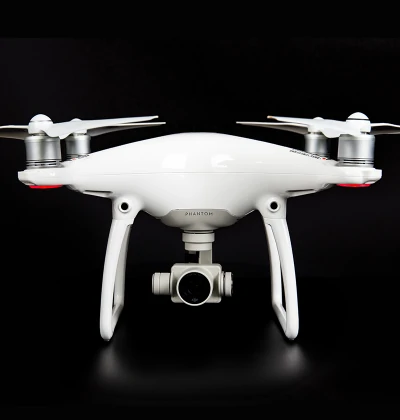

Aerospace & UAV
WJ Prototypes is your 3D manufacturing partner from prototype to large scale production.

Consumer Electronics
New Product Introduction Solutions for Consumer Electronics.

Robotics & Automation
Need some assistance bringing your robotic device or parts from the sketch-board to reality?

Medical Devices
The medical industry needs high quality, dependable and safe parts and products.

Automotive
New Product Introduction Solutions for Automotive

Industrial Machinery
The main purpose of industrial prototyping is to take the product from drawings into the real world.
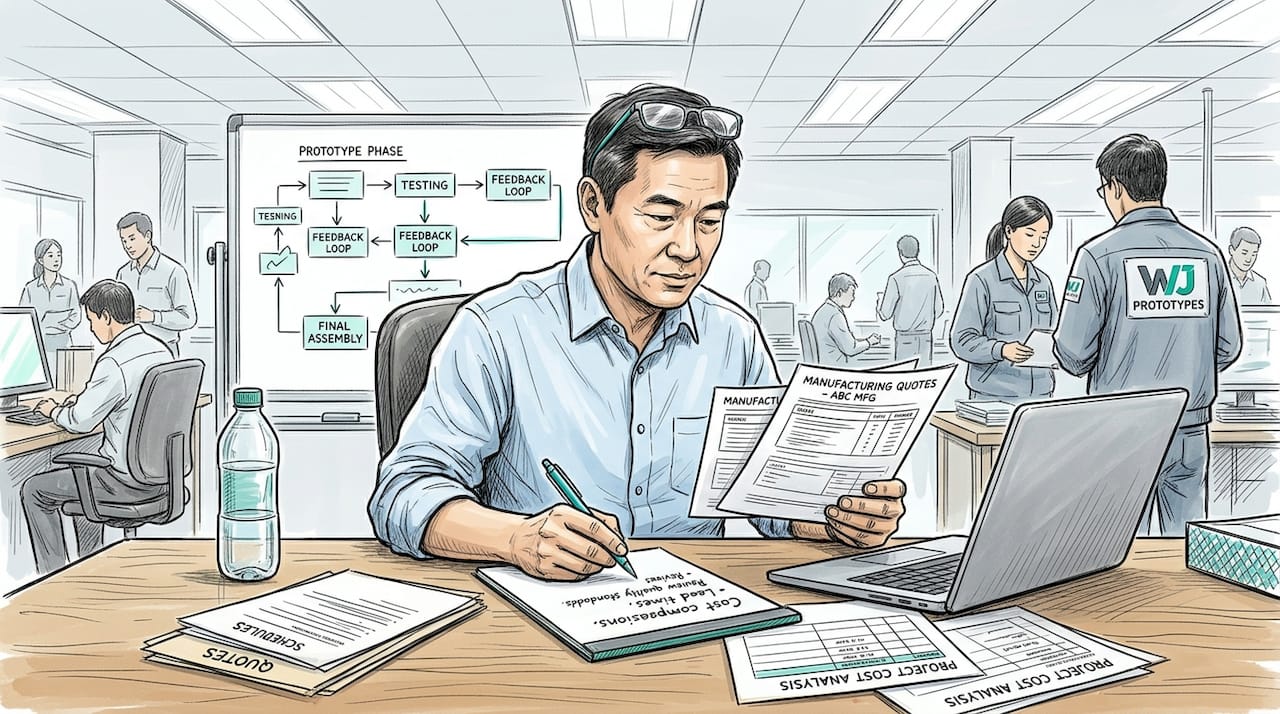

The assumption that going “factory direct” always saves money is one of the most persistent myths in SME procurement. Many product managers and procurement specialists discover too late that a lower unit price from a Chinese factory can balloon into a much higher total bill once shipping, tariffs, quality failures, and communication delays are factored in. Direct factory sourcing can reduce costs by 20 to 40% by cutting out intermediaries, but that headline number rarely survives contact with reality. This article breaks down the real cost drivers for both sourcing paths and gives you a practical framework to choose the right one for your next project.
| Point | Details |
|---|---|
| No one-size-fits-all | The cheapest option depends on your volume, risk profile, and project complexity. |
| Hidden costs add up | Shipping, tariffs, and compliance can erase direct savings—calculate total landed cost. |
| Hybrid strategies win | Start prototyping on platforms for speed and risk control, then scale with direct factories when appropriate. |
| Mitigate project risks | Understand IP, compliance, and communication pitfalls before choosing your path. |
Before you can assess cost, you need to clearly define your sourcing models. An online manufacturing platform is a digital marketplace that connects buyers with a vetted network of manufacturers. Platforms like Xometry, Fictiv, and Hubs handle quoting, supplier matching, quality checks, and logistics coordination through a single interface. You upload a CAD file, get a quote in minutes, and receive parts with documented quality assurance.
Direct factory sourcing means contacting manufacturers without a platform intermediary. This can happen through Alibaba, trade shows, referrals, or local sales reps. You negotiate directly, manage your own quality control, and handle all logistics and compliance paperwork yourself.
Here is how the two models compare at a glance:
| Factor | Online platform | Direct factory |
|---|---|---|
| Quoting speed | Minutes (automated) | Days to weeks |
| Minimum order quantity | Often 1 unit | Usually 50+ units |
| IP protection | Platform-enforced NDAs | Buyer-managed |
| Quality assurance | Built-in inspection | Self-managed or third-party |
| Unit price | Higher per part | Lower per part |
| Hidden cost risk | Low | High |
Typical use cases differ sharply. Online platforms suit one-off prototypes, complex geometries, regulated industries, and buyers who need speed over price. Direct factory sourcing suits repeat orders of standardized parts at volume, where the buyer has established trust and internal QC capacity.

User profiles also diverge. A startup building its first functional prototype almost always benefits from a platform. A procurement specialist ordering 500 identical injection-molded housings for the third time is a strong candidate for direct sourcing. Knowing which profile fits your current project is the first decision you need to make.
Now that you know what each sourcing type means, let’s quantify what you’re really paying for. The all-in cost of a manufacturing order includes far more than the unit price on a supplier’s quote sheet.

For a typical SME prototype batch priced at $1,000 at the factory gate, here is what the real math can look like:
| Cost element | Online platform | Direct factory |
|---|---|---|
| Base unit price | $1,200 | $1,000 |
| Platform/service fee | $0 to $80 | $0 |
| International shipping | $80 | $120 |
| Import tariffs (avg.) | Included or low | $150 to $300 |
| QC inspection | Included | $100 to $200 |
| Rework/rejection risk | Low | Medium to high |
| Estimated total | $1,280 to $1,360 | $1,370 to $1,620 |
The total landed cost (TLC) is the only number that matters. TLC includes every expense from factory floor to your receiving dock. As BCG’s 2025 analysis confirms, shipping and tariffs often erode the savings that direct sourcing promises on paper.
Hidden costs hit direct buyers hardest. These include:
Pro Tip: Always calculate TLC before comparing quotes. A factory price that looks 25% cheaper can end up costing more once you add tariffs, inspection, and one rework cycle.
With costs broken down, let’s put theory into practice with real-world decision logic for SMEs. Online platforms win on total cost in more scenarios than most buyers expect.
For teams exploring prototyping in China, the platform model also reduces the coordination burden that comes with cross-border manufacturing. And if your goal is to reduce prototyping costs over the long term, starting with a platform-validated design before moving to direct production is a proven strategy.
“The cheapest quote is rarely the cheapest outcome. For SMEs without dedicated supply chain teams, platform overhead often pays for itself in avoided rework and delays.”
Sustainable supply chain practices also increasingly favor platforms, which can provide supplier audits and environmental compliance documentation that direct sourcing rarely offers out of the box.
What about buyers confident in managing a direct relationship and wanting to capture those headline savings? Direct sourcing does deliver real advantages in the right conditions.
The 20 to 40% cost reduction from cutting out intermediaries is achievable, but only when several conditions are met:
For teams considering cost-effective prototyping in China, the path to direct savings usually runs through a platform first. The benefits of rapid prototyping include design validation that makes your direct factory conversations far more productive.
Pro Tip: Before going direct, request a factory audit report or third-party certification. Reputable factories will provide ISO certificates and recent inspection records without hesitation. If they resist, that is your answer.
Always check current import tariffs for your product category before finalizing a direct sourcing decision. Tariff changes in 2025 and 2026 have significantly shifted the math for many product categories.
Struggling to fit your project into one model? Here is where hybrid sourcing comes in as a practical, proven solution. BCG’s research confirms that hybrid models combining platform prototyping with direct production are optimal for most SMEs.
Here is how to execute a hybrid strategy effectively:
For a detailed walkthrough of the prototyping phase, the guide on prototyping parts step-by-step covers the documentation and design freeze process that makes the platform-to-direct transition smooth.
Key questions to ask at each phase include: Is the design frozen? Do I have a complete drawing package? Has the factory been audited? What is my fallback if quality fails? Understanding nearshoring vs. offshoring tradeoffs also helps you decide whether a China-based direct factory or a regional supplier better fits your logistics model.
Now, let’s put everything together so you can make the right call for your next project.
Green lights for online platforms:
Green lights for direct factory sourcing:
Quick decision checklist for SMEs:
| Project stage | Key question | Recommended path |
|---|---|---|
| Concept/early prototype | Is the design stable? | Online platform |
| Functional prototype | Do I need IP protection? | Online platform |
| Pilot production (10 to 50 units) | Do I have a vetted supplier? | Hybrid |
| Volume production (100+ units) | Is TLC favorable? | Direct factory |
| Repeat orders | Is quality proven? | Direct factory |
The real-world answer for most SMEs is not either/or. It is a sequenced strategy that uses each model where it performs best. Cost, risk, speed, and IP protection pull in different directions at different project stages. The buyers who win are the ones who treat sourcing as a dynamic decision, not a one-time choice.
Ready to apply these frameworks and start your next project with confidence? WJ Prototypes bridges the gap between platform convenience and direct factory economics. As an ISO-certified manufacturer based in China with global delivery capacity, WJ Prototypes offers instant online quoting alongside direct engineering support, so you get the speed and documentation of a platform with the cost structure of a factory relationship. Whether you need a single SLA prototype or a batch of 500 CNC-machined parts, services like vacuum casting and CNC machining are backed by experienced engineers who understand the full prototype-to-production journey. Explore real case studies and get a quote today.
Online manufacturing platforms centralize quoting, compliance, and logistics through a vetted supplier network, while direct factory sourcing connects buyers straight to manufacturers without intermediaries, placing coordination and quality control entirely on the buyer.
Shipping and tariffs can add 30 to 50% or more to your project cost, and as BCG’s analysis shows, total landed cost including these factors often erodes the upfront savings that direct factory sourcing appears to offer.
Direct sourcing carries significant risk for IP-sensitive designs, ITAR-regulated components, or buyers without in-house quality control, where platform-managed compliance provides a safer and often more cost-effective alternative.
Most SMEs benefit from online platforms for fast, low-risk prototyping, and hybrid sourcing models that start on a platform and transition to direct factory partnerships for volume production are widely considered optimal for growing product teams.
SERVICES
RESOURCES