



- Room 1807, Unit 9, Building 2, Shangxing Commercial Street, Shangde Road, Shangxing Community, Xinqiao Subdistrict, Bao'an District, Shenzhen City, China
CONTACT US

WhatsApp


Contact Us
Our team is on stand by, waiting toassist you.

Videos
A large collection of educational videos and tutorials.

About Us
Learn about our company, leadership, and mission totransform manufacturing.

Privacy Policy
Applies to all personal information collected through and/or processed in connection.
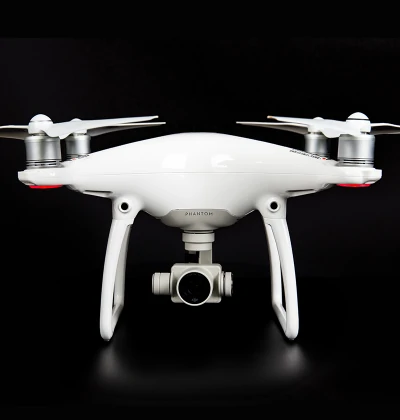

Aerospace & UAV
WJ Prototypes is your 3D manufacturing partner from prototype to large scale production.

Consumer Electronics
New Product Introduction Solutions for Consumer Electronics.

Robotics & Automation
Need some assistance bringing your robotic device or parts from the sketch-board to reality?

Medical Devices
The medical industry needs high quality, dependable and safe parts and products.

Automotive
New Product Introduction Solutions for Automotive

Industrial Machinery
The main purpose of industrial prototyping is to take the product from drawings into the real world.
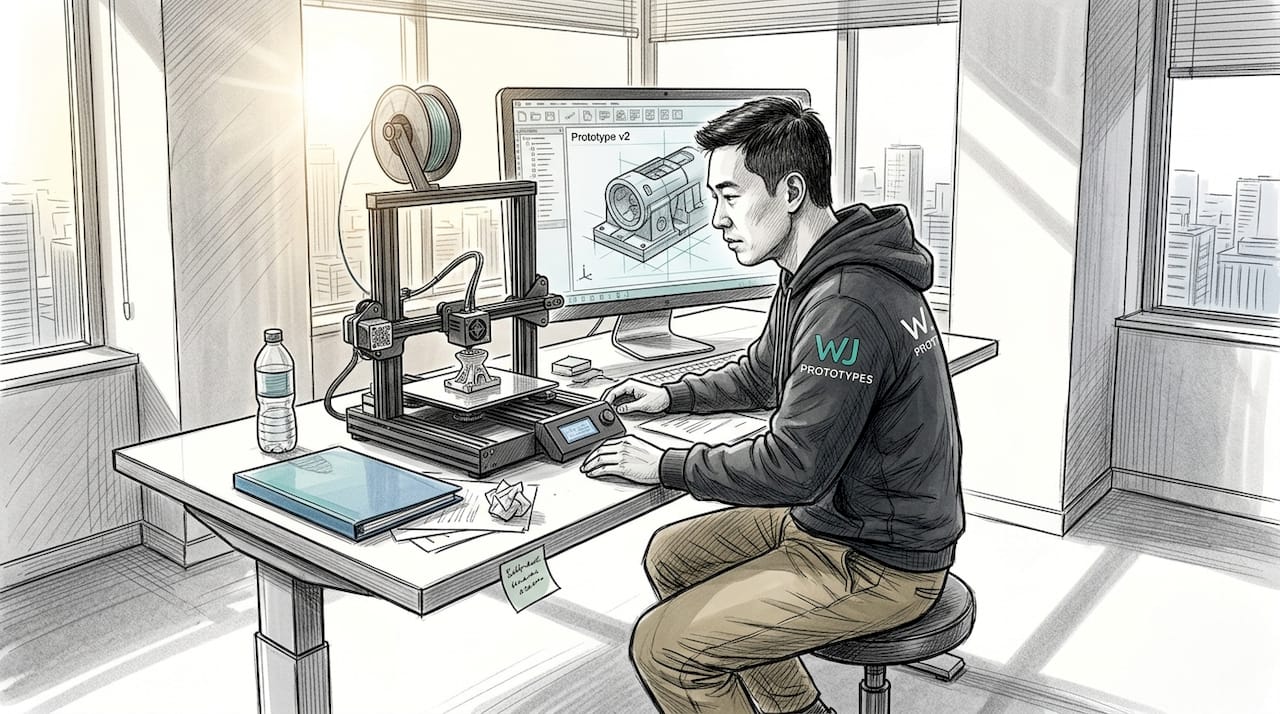
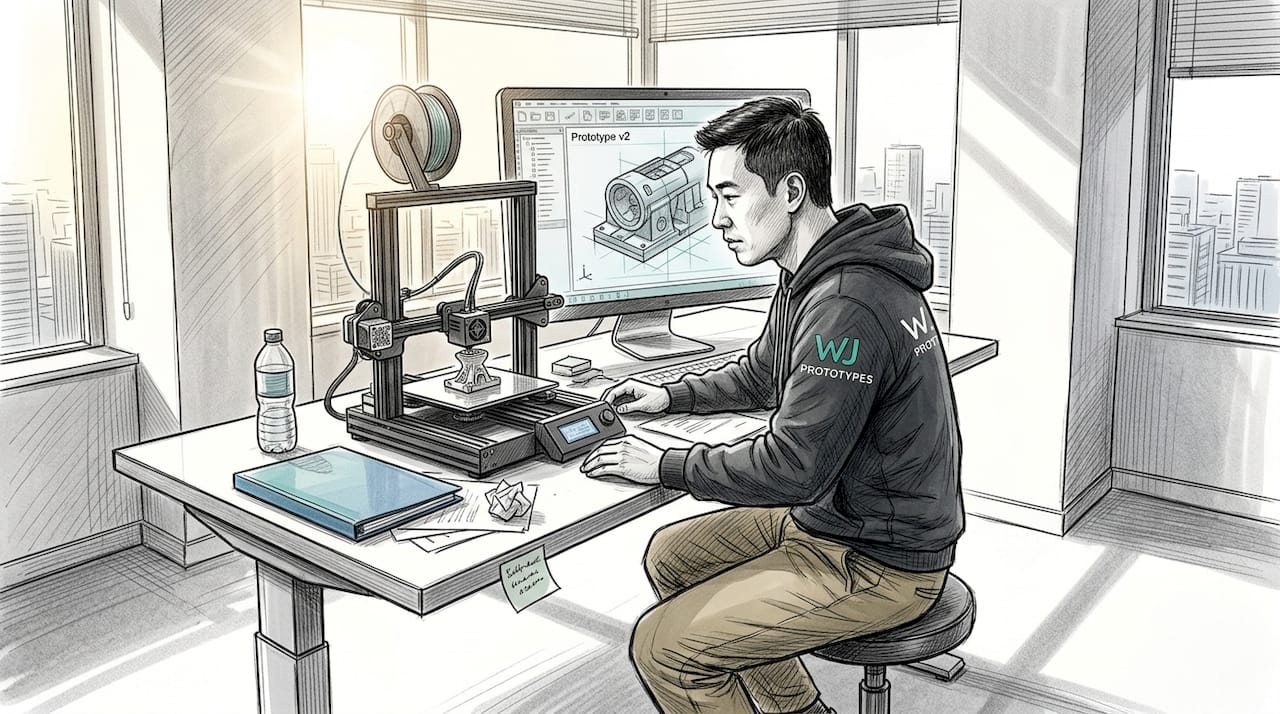
Selecting the right prototyping method often feels like navigating a maze of competing priorities. Material properties, turnaround times, cost constraints, and functional requirements all demand careful consideration. While 3D printing platforms offer innovative solutions, they're not universally optimal for every prototype scenario. This article clarifies exactly when additive manufacturing excels in prototype development and when complementary methods deliver better results for aerospace, automotive, medical, and robotics applications.
| Point | Details |
|---|---|
| Complex geometries win | 3D printing excels at complex geometries and internal features that are difficult or costly to achieve with traditional machining. |
| Material compatibility matters | The available materials such as resins polymers elastomers and metal powders determine whether prototypes meet functional requirements. |
| Fast iterations enable testing | Rapid iteration cycles allow overnight design changes and quick testing of multiple variants to compress development timelines. |
| Complement with other methods | Cost and speed benefits vary by prototype stage and industry, so using CNC or vacuum casting can optimize results when needed. |
3D printing platforms use additive manufacturing to build prototypes layer by layer from digital models. This approach fundamentally differs from subtractive methods that remove material from solid blocks. The technology enables rapid fabrication of complex geometries not feasible with traditional manufacturing.
Three primary technologies dominate prototype development. Stereolithography (SLA) uses ultraviolet lasers to cure liquid resin into solid parts with excellent surface finish. Selective Laser Sintering (SLS) fuses powder particles together without support structures, ideal for functional testing. Fused Deposition Modeling (FDM) extrudes thermoplastic filaments to create durable prototypes at lower costs.
The types of additive manufacturing available today serve distinct purposes across industries. Aerospace engineers leverage these platforms to create lightweight structural components for testing. Automotive designers iterate on housing designs and fitment checks. Medical device developers produce patient-specific models for surgical planning. Robotics teams validate mechanical assemblies before committing to tooling.
Additive manufacturing's core advantage lies in design freedom. Traditional machining struggles with internal channels, organic shapes, and lattice structures that 3D printing handles effortlessly. This capability proves invaluable when exploring unconventional design solutions that optimize weight, strength, or fluid dynamics.
Quick iteration cycles represent another critical benefit. Design modifications that would require new tooling or extensive machine setup can be implemented overnight with 3D printing. Engineers test multiple variants simultaneously, gathering performance data that informs final design decisions. This rapid feedback loop compresses development timelines from months to weeks.
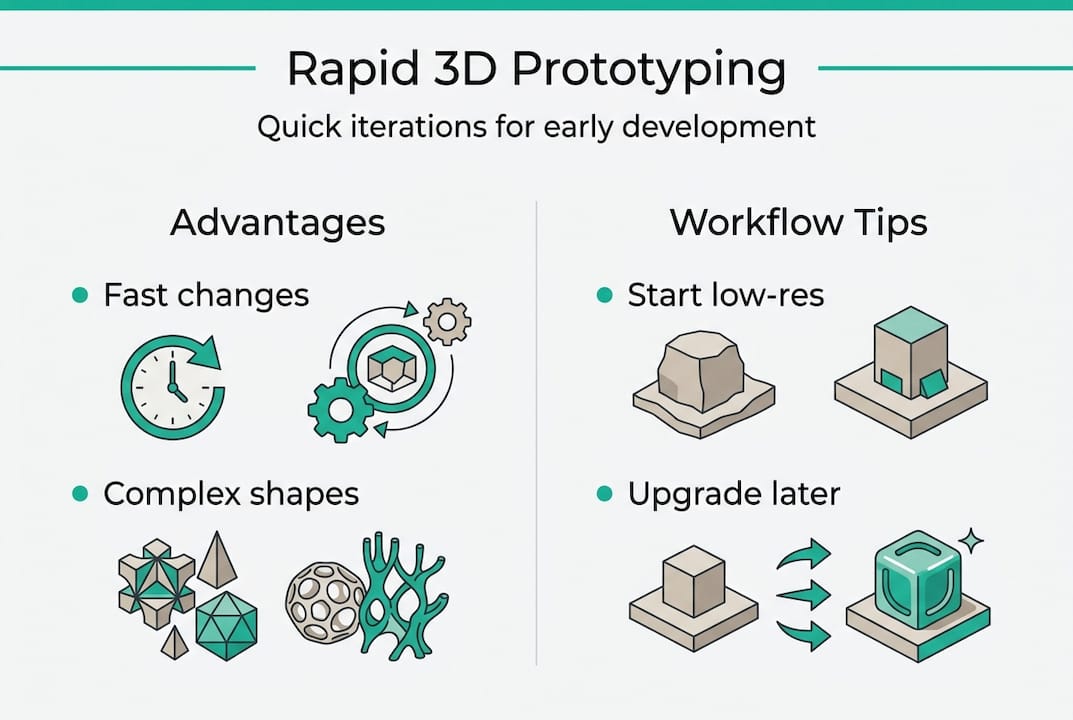
Pro Tip: Start with lower-resolution prints for initial form checks, then increase resolution only for prototypes requiring detailed surface inspection or client presentations.
Complex geometries make 3D printing the clear winner. When your design includes undercuts, internal cavities, or intricate surface textures, additive methods eliminate the multi-axis machining complexity that drives up costs. Conformal cooling channels in injection mold prototypes or biomimetic structures in medical implants become straightforward to produce.
Low-volume prototype runs favor 3D printing economics. Traditional manufacturing requires tooling investment that only makes sense at higher quantities. For initial prototypes or design validation batches under 50 units, 3D printing offers cost-effective prototyping without upfront tooling expenses.
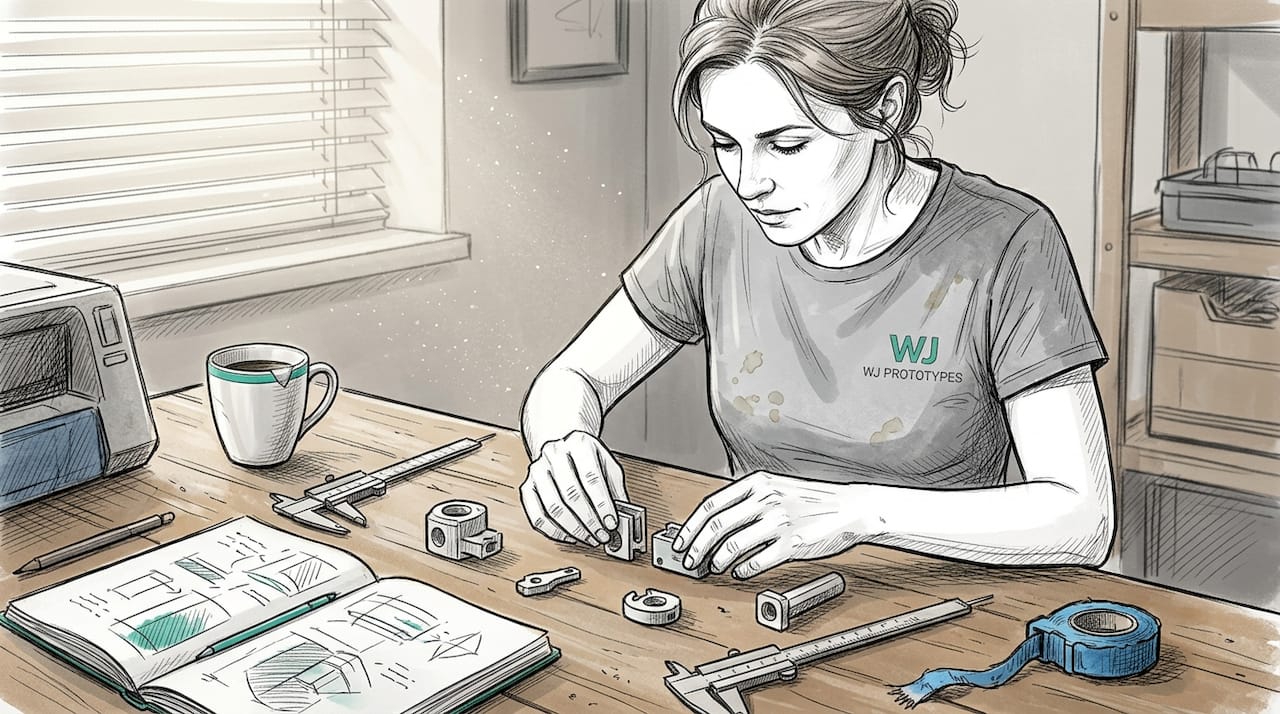
Rapid design changes occur constantly in early development stages. When you're exploring multiple concepts or responding to test feedback, the ability to modify CAD files and print updated versions within 24 to 48 hours proves invaluable. This agility supports true iterative design processes.
| Method | Typical Turnaround | Relative Cost | Complexity Handling |
|---|---|---|---|
| 3D Printing (SLA/SLS) | 1-3 days | Medium | Excellent for organic shapes |
| CNC Machining | 3-7 days | High for complex parts | Limited by tool access |
| Vacuum Casting | 5-10 days | Low per unit at volume | Requires master pattern |
Material compatibility matters significantly. Modern 3D printing materials include engineering-grade thermoplastics, flexible elastomers, and even metal powders. When your functional requirements align with available materials, additive manufacturing delivers prototypes with properties close to production parts.
Lightweight components critical for aerospace and automotive applications benefit from topology optimization. 3D printing enables lattice structures and variable-density designs that reduce weight while maintaining strength. These optimized geometries would be impossible or prohibitively expensive to machine.
The types of rapid prototyping for engineers include several additive options suited to different validation needs. SLA produces smooth surfaces for visual prototypes and fit checks. SLS creates durable parts for functional testing without support removal. Each technology addresses specific prototype requirements.
Pro Tip: Use 3D printing for your first three to five design iterations to explore the solution space quickly, then transition to higher-fidelity methods once the design stabilizes.
Material strength limitations constrain some applications. While engineering resins and nylon powders offer decent mechanical properties, they rarely match the performance of machined metals or cast production materials. Parts subjected to high stress, extreme temperatures, or chemical exposure may fail when 3D printed but succeed when produced through traditional methods.
Surface finish quality varies significantly across technologies. FDM parts show visible layer lines requiring extensive post-processing. SLA produces smoother surfaces but may exhibit stair-stepping on curved geometries. When cosmetic appearance or tight tolerances matter, CNC machining offers superior material properties and finishes straight from the machine.
Dimensional accuracy challenges emerge with larger parts. Thermal stresses during printing can cause warping or shrinkage, particularly with FDM technology. Parts requiring precision fits or exact dimensions often need secondary machining operations, negating some speed advantages.
| Factor | 3D Printing | CNC Machining | Vacuum Casting |
|---|---|---|---|
| Cost per part | Medium | High | Low at 10+ units |
| Turnaround time | 1-3 days | 3-7 days | 5-10 days |
| Dimensional accuracy | ±0.1-0.3mm | ±0.02-0.05mm | ±0.15-0.3mm |
| Material options | Limited to printable | Extensive metals/plastics | Production-like polyurethanes |
| Surface finish | Requires post-processing | Excellent as-machined | Excellent with proper molds |
Functional testing requirements often exceed 3D printed material capabilities. Prototypes validating structural integrity, wear resistance, or long-term durability need materials that accurately represent production properties. CNC machining materials provide access to actual production-grade metals and engineering plastics.
Build size restrictions limit part dimensions. Most industrial 3D printers accommodate builds up to 300-500mm in any direction. Larger prototypes require segmentation and assembly, introducing additional complexity and potential weak points at joints.
Vacuum casting service bridges the gap between 3D printing and production tooling. This method uses a 3D printed master to create silicone molds, then casts production-like polyurethane parts. The result combines 3D printing's design freedom with material properties closer to injection molding.
Pro Tip: Develop form and fit prototypes with 3D printing to validate ergonomics and assembly, then produce functional test units through CNC machining or vacuum casting to verify performance under real-world conditions.
Effective prototyping workflows blend additive and subtractive methods to balance speed, cost, and functional requirements. A systematic approach ensures you leverage each technology's strengths at the appropriate development stage.
Common challenges require proactive mitigation strategies. Material limitations get addressed by matching prototype methods to testing requirements rather than forcing 3D printing into unsuitable applications. Post-processing needs factor into timeline planning, with surface finishing, support removal, and curing steps accounted for upfront.
Design for additive manufacturing principles prevent issues before they occur. Considerations include:
Expert prototyping services provide valuable guidance throughout this process. Experienced engineers identify potential issues in CAD files, recommend optimal technologies for specific requirements, and suggest additive manufacturing advantages you might overlook. Their material knowledge and process expertise help avoid costly mistakes and accelerate development timelines.
Collaboration between design and manufacturing teams ensures prototypes serve their intended purpose. Clear communication about testing objectives, performance criteria, and acceptable trade-offs prevents misalignment between prototype capabilities and validation needs.
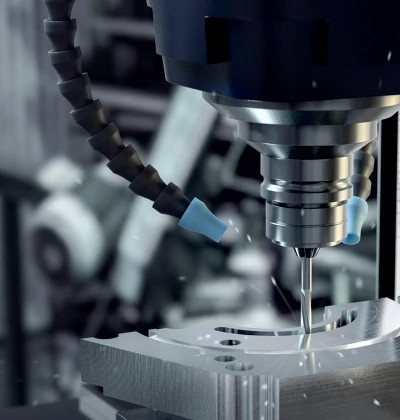
When your prototypes demand materials, finishes, or precision beyond typical 3D printing capabilities, professional CNC machining services deliver production-grade results. Advanced multi-axis equipment handles complex geometries in metals and engineering plastics with tight tolerances. CNC machining materials include aluminum alloys, stainless steels, titanium, and high-performance thermoplastics that match final production specifications.
Vacuum casting service provides another powerful option for functional and visual prototypes. This process produces parts with excellent surface finish and material properties similar to injection molding, ideal for user testing and market validation. Combining these methods with 3D printing creates a comprehensive prototyping strategy that addresses every development stage efficiently.
Typical 3D printed prototypes are completed within one to three days depending on part size, complexity, and chosen technology. SLA and SLS prints require additional time for post-processing steps like support removal and curing. This rapid turnaround supports fast iteration cycles, enabling engineers to test multiple design variants weekly rather than waiting weeks between revisions.
Additive manufacturing 3D printing materials range from standard photopolymer resins to engineering-grade nylons, ABS-like thermoplastics, flexible TPU elastomers, and metal powders including aluminum and titanium. Material selection significantly impacts strength, heat resistance, chemical compatibility, and surface finish. Each technology offers different material options, with SLS providing the broadest range of engineering thermoplastics suitable for functional testing.
3D printing excels for rapid concept validation and complex geometries but often lacks the surface finish quality and material strength of CNC machining materials or vacuum cast parts. Each method serves distinct purposes in comprehensive prototyping workflows. Optimal results come from using them in combination, leveraging 3D printing for early iterations and geometric complexity while employing CNC or casting for functional validation requiring production-grade properties.
Advantages Of SLA 3D Printing - Why Choose WJ Prototypes, China
7 Essential Types of Rapid Prototyping for Engineers
7 Key Benefits of 3D Printing for Modern Product Development
Multi-Material Printing for Efficient Prototyping and Production
SERVICES
RESOURCES