




- Room 1807, Unit 9, Building 2, Shangxing Commercial Street, Shangde Road, Shangxing Community, Xinqiao Subdistrict, Bao'an District, Shenzhen City, China
CONTACT US

WhatsApp


Contact Us
Our team is on stand by, waiting toassist you.

Videos
A large collection of educational videos and tutorials.

About Us
Learn about our company, leadership, and mission totransform manufacturing.

Privacy Policy
Applies to all personal information collected through and/or processed in connection.


Aerospace & UAV
WJ Prototypes is your 3D manufacturing partner from prototype to large scale production.

Consumer Electronics
New Product Introduction Solutions for Consumer Electronics.

Robotics & Automation
Need some assistance bringing your robotic device or parts from the sketch-board to reality?

Medical Devices
The medical industry needs high quality, dependable and safe parts and products.

Automotive
New Product Introduction Solutions for Automotive

Industrial Machinery
The main purpose of industrial prototyping is to take the product from drawings into the real world.
TL;DR:
- Material selection should be integrated early in the product design process to reduce lifecycle costs and prevent costly redesigns. Evaluating materials against five key criteria—performance, cost, supply chain, process compatibility, and compliance—ensures optimal choices that align with manufacturing and regulatory requirements. Collaborative, disciplined decision-making supported by PLM tools and physical prototyping minimizes risks and enhances product quality and brand perception.
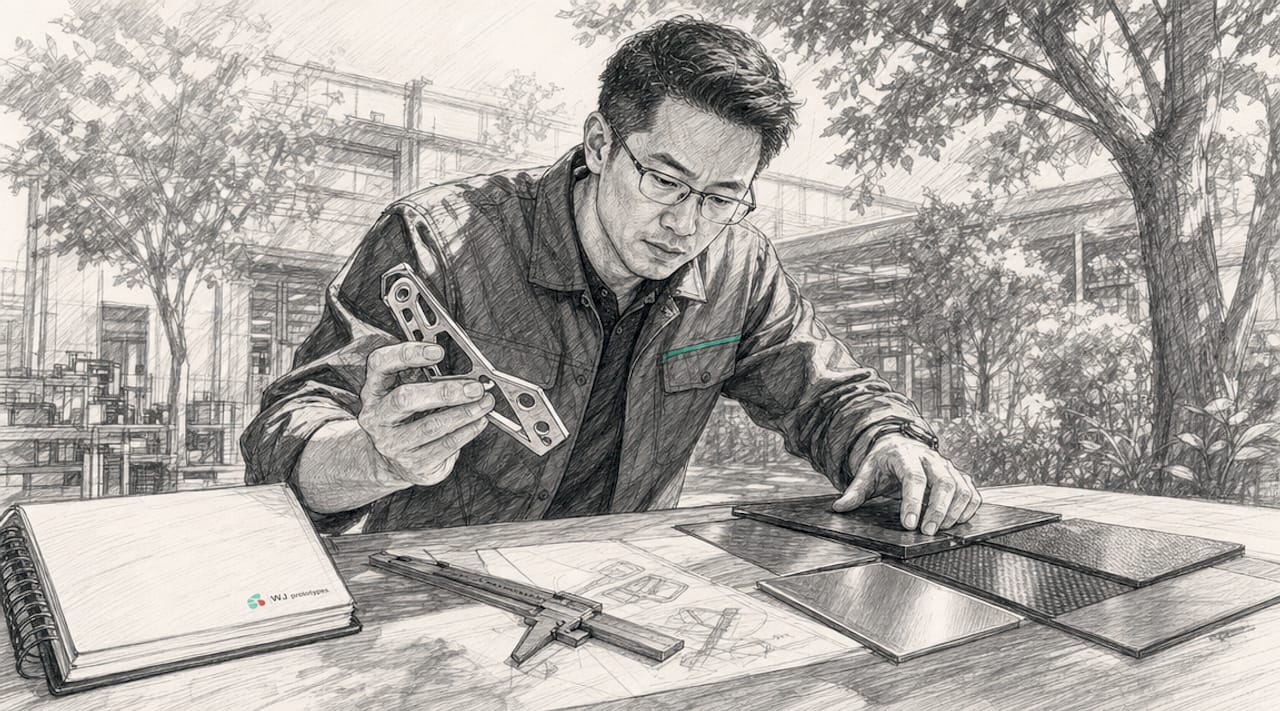
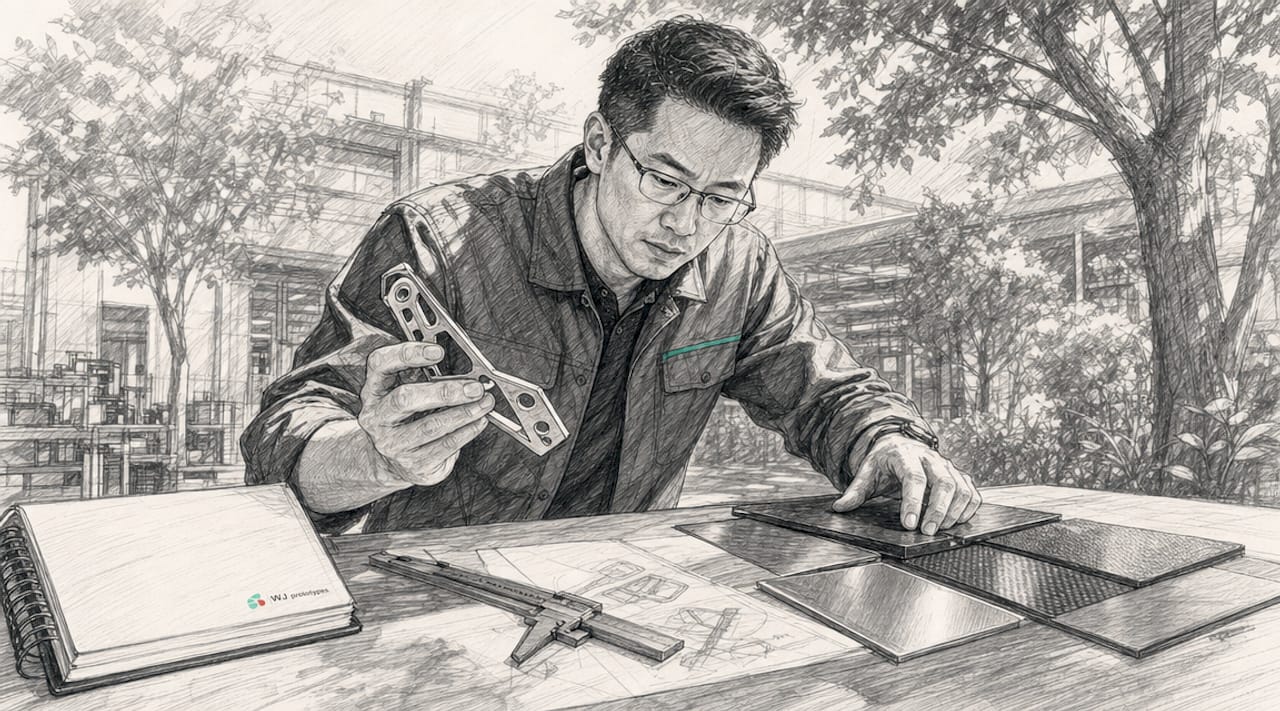
Material selection is the process of identifying the optimal material for a product based on performance requirements, cost constraints, manufacturing compatibility, and regulatory compliance. Get it wrong and you pay for it twice: once during production and again through warranty claims, redesigns, and lost market access. Best-in-class manufacturers are 2.2 times more likely to integrate material selection early in the design cycle to reduce lifecycle costs. That single statistic explains why material choice belongs in the design brief, not the procurement order.
Material selection in product design is formally defined in engineering practice as the systematic evaluation of candidate materials against a defined set of performance, cost, and process criteria. It is not a purchasing decision. Treating material choice as a procurement item rather than a design variable consistently produces suboptimal outcomes, from over-engineered assemblies to supply chain bottlenecks that delay production by weeks.
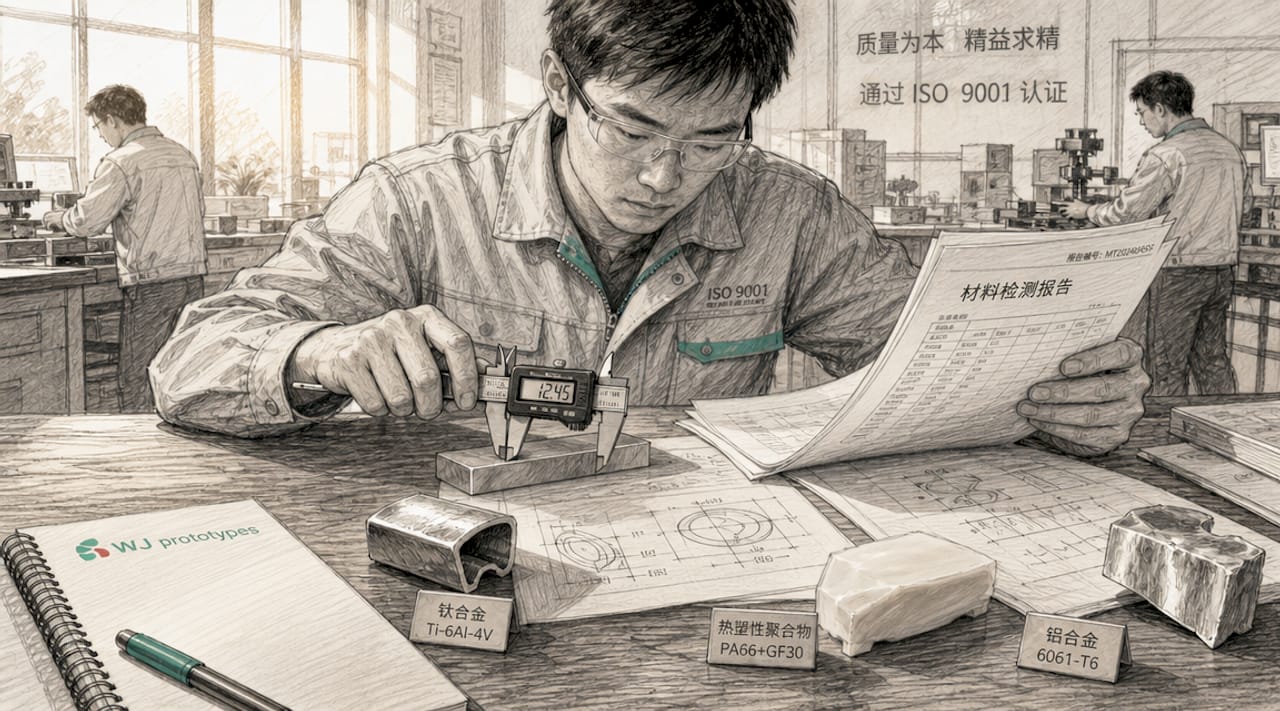
The reason why material selection is critical at the design stage comes down to downstream leverage. A material decision made on day one of a project shapes every subsequent step: the manufacturing process you can use, the tolerances you can hold, the certifications you must obtain, and the end-of-life options available to your customer. Changing a material after tooling has been cut or a supply agreement has been signed costs exponentially more than getting it right upfront.
Consider the aerospace sector. A structural bracket specified in titanium alloy Ti-6Al-4V carries different fabrication constraints than the same bracket in aluminum 7075-T6. The titanium version requires specialized CNC toolpaths, slower cutting speeds, and different fixturing. If that decision surfaces after the machining program is written, you are not just changing a material. You are rewriting the manufacturing plan.
Effective material selection criteria fall into five interconnected categories. No single factor dominates. There is no universal best material; success depends on balancing role, performance, cost, maintenance, and environmental impact across the full product lifecycle.
The five criteria are:
Beyond technical specs, a product’s material signals brand identity, quality, and usability to the end user. The weight of a medical instrument in a surgeon’s hand, the surface texture of a consumer electronics enclosure, and the acoustic properties of an automotive interior panel all communicate quality before a single feature is used.
Pro Tip: Build a one-page material selection scorecard at the start of each project. Score each candidate material against your five criteria using a weighted ranking. It forces the conversation early and creates a documented rationale that survives team changes.

The effects of material choice on manufacturing efficiency are concrete and measurable. They show up in cycle times, scrap rates, tooling life, and warranty return rates. Here is how each impact category plays out in practice:
Production bottlenecks from incompatible materials. A composite material specified for a structural panel cannot be joined by conventional welding. Choosing incompatible materials with manufacturing methods forces process substitutions, secondary bonding operations, or complete redesigns. Each substitution adds cost and calendar time.
Scrap and rework from material inconsistency. Inconsistent material properties across batches, common with some imported alloys and recycled feedstocks, drive dimensional variation and surface defect rates. A production line running at 3% scrap due to material hardness variation is losing more money per year than the cost difference between a certified and uncertified material source.
Weight reduction and its downstream savings. Switching from steel to aluminum or from aluminum to a glass-filled nylon in a non-structural component reduces shipping weight, which compounds across thousands of units. In electric vehicle programs, every gram saved in non-structural components extends battery range. The material decision and the energy efficiency target are the same decision.
Durability and warranty cost reduction. Material choice affects warranty claims months after the design decision is made and forgotten. A seal material that degrades at the upper end of its rated temperature range will generate field failures in summer operating conditions. Specifying a material with a 20°C higher service temperature costs more upfront and eliminates an entire category of warranty exposure.
Traceability and market access. Medical and aerospace components require full material traceability from raw stock to finished part. Specifying a material without a certified supply chain means building traceability from scratch, which adds cost and can block market entry entirely in regulated sectors.
The prototyping materials impact on cost and speed is most visible when teams skip physical validation. A material that performs perfectly in simulation but fails in a drop test or thermal cycle test reveals a problem that simulation did not catch. Physical prototypes built from production-representative materials are the only reliable gate before committing to tooling.
Most material selection failures are not caused by ignorance of material science. They are caused by process failures: the wrong people in the room at the wrong time, or the right information arriving too late.
The most frequent and costly mistakes include:
Pro Tip: Run a material-process compatibility check as a formal gate in your design review process. Require sign-off from both manufacturing engineering and procurement before a material is locked. This single step eliminates the majority of late-stage material change orders.
The best practices for material selection share one structural feature: they move the decision earlier and involve more disciplines. Here is how that looks in practice across the development workflow.
| Workflow stage | Material selection activity | Key collaborators |
|---|---|---|
| Concept design | Define performance envelope and shortlist candidate materials | Design engineering, materials engineering |
| Preliminary design | Score candidates against weighted criteria; confirm process compatibility | Manufacturing engineering, procurement |
| Detailed design | Lock material specification; confirm supplier qualification and lead time | Procurement, quality assurance |
| Prototype build | Validate material performance in physical test conditions | Test engineering, manufacturing |
| Production release | Confirm traceability documentation and compliance certifications | Quality, regulatory affairs |
Product Lifecycle Management (PLM) platforms like Siemens Teamcenter and PTC Windchill link material data directly to design models and simulation environments. This means a change to a material specification propagates automatically to the bill of materials, the simulation model, and the compliance record. Without PLM integration, material changes are tracked in spreadsheets and email threads, which is where errors live.
Cross-functional collaboration is not optional. Material selection is a strategic procurement decision requiring early cross-functional collaboration to avoid supply chain bottlenecks and non-scalable processes. The 5-step prototyping material guide from Wjprototypes illustrates how rapid development teams can structure this process without adding bureaucratic overhead.
Sustainability is increasingly a workflow input, not an afterthought. The EU’s Ecodesign for Sustainable Products Regulation (ESPR), which took effect in 2024, requires designers to document material recyclability and repairability at the design stage. Teams that build this into their material selection workflow now avoid a compliance scramble when regulations tighten further.
Material selection is a strategic design decision that determines product performance, manufacturing efficiency, and total lifecycle cost from the earliest phases of development.
| Point | Details |
|---|---|
| Integrate selection early | Best-in-class manufacturers are 2.2x more likely to select materials early, reducing lifecycle costs significantly. |
| Apply five core criteria | Evaluate every candidate material against performance, cost, supply chain, process compatibility, and compliance. |
| Avoid process mismatches | Confirm manufacturing method compatibility before locking any material specification to prevent costly rework. |
| Include procurement from day one | Late procurement involvement causes delays, cost overruns, and regulatory exposure that early collaboration prevents. |
| Validate with physical prototypes | Simulation alone does not catch all material failure modes; production-representative prototypes are the reliable gate. |
Working across aerospace, medical, and consumer electronics programs, I have watched the same failure repeat itself: a talented design team selects a technically excellent material and then hands it to procurement as a line item. Six weeks before production launch, procurement discovers the material has a 14-week lead time from a single qualified supplier. The team scrambles, substitutes a second-choice material, and spends the next three months validating the substitute under deadline pressure.
The teams that avoid this are not smarter about materials science. They are smarter about process. They bring procurement into the design review at the concept stage, not the release stage. They treat the supply chain as a design constraint with the same weight as tensile strength or thermal resistance.
The other pattern I find underappreciated is the brand signal embedded in material choice. Material selection affects brand identity and user experience in ways that no specification sheet captures. The reason premium medical devices use brushed stainless steel rather than equivalent-strength aluminum is not mechanical. It is perceptual. The weight and surface quality communicate precision and reliability before the device is switched on. Designers who understand this use material selection as a communication tool, not just an engineering variable.
My honest recommendation: build a material selection gate into your design process with the same formality as a design review. Require a documented rationale, a process compatibility check, and a procurement sign-off. It adds one meeting to your schedule and removes weeks of late-stage firefighting.
— Yu
Physical validation of material decisions is where prototyping services pay for themselves. Wjprototypes offers vacuum casting and urethane prototyping services that let you build small batches of parts from production-representative materials before tooling is cut. Urethane casting supports a wide range of Shore hardness values and material properties, making it the right tool for testing how a material performs under real operating conditions rather than simulated ones. For teams working across aerospace, medical, or industrial machinery programs, early-stage physical validation through Wjprototypes reduces the risk of material-driven redesigns at the production stage. Request an instant quote directly on the Wjprototypes platform.
Material selection determines whether a product meets its performance requirements, can be manufactured efficiently, and complies with regulatory standards. Getting it wrong generates rework, warranty claims, and supply chain delays that cost far more than the original material decision.
The five core criteria are mechanical performance, total cost of ownership, supply chain availability, manufacturing process compatibility, and regulatory compliance. Scoring each candidate material against these criteria with weighted rankings produces defensible, documented decisions.
Incompatible material-process combinations force production substitutions and rework. Inconsistent material quality drives scrap rates. Both outcomes increase cost and extend lead times in ways that are entirely preventable with earlier material validation.
Excluding procurement from the design process is the most costly and most common mistake. Ignoring procurement input during design leads to downstream production issues including delays, cost overruns, and regulatory exposure that early collaboration would have prevented.
PLM platforms like Siemens Teamcenter and PTC Windchill link material specifications directly to design models, bills of materials, and compliance records. When a material changes, every downstream document updates automatically, eliminating the manual tracking errors that cause late-stage surprises.
SERVICES
RESOURCES