



- Room 1807, Unit 9, Building 2, Shangxing Commercial Street, Shangde Road, Shangxing Community, Xinqiao Subdistrict, Bao'an District, Shenzhen City, China
CONTACT US

WhatsApp


Contact Us
Our team is on stand by, waiting toassist you.

Videos
A large collection of educational videos and tutorials.

About Us
Learn about our company, leadership, and mission totransform manufacturing.

Privacy Policy
Applies to all personal information collected through and/or processed in connection.
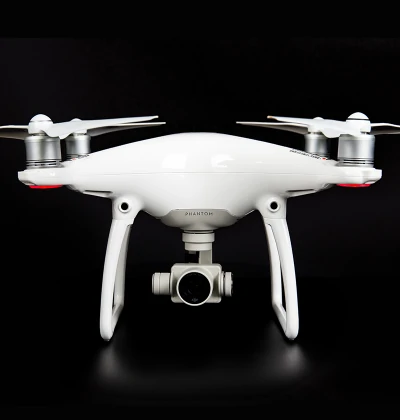

Aerospace & UAV
WJ Prototypes is your 3D manufacturing partner from prototype to large scale production.

Consumer Electronics
New Product Introduction Solutions for Consumer Electronics.

Robotics & Automation
Need some assistance bringing your robotic device or parts from the sketch-board to reality?

Medical Devices
The medical industry needs high quality, dependable and safe parts and products.

Automotive
New Product Introduction Solutions for Automotive

Industrial Machinery
The main purpose of industrial prototyping is to take the product from drawings into the real world.
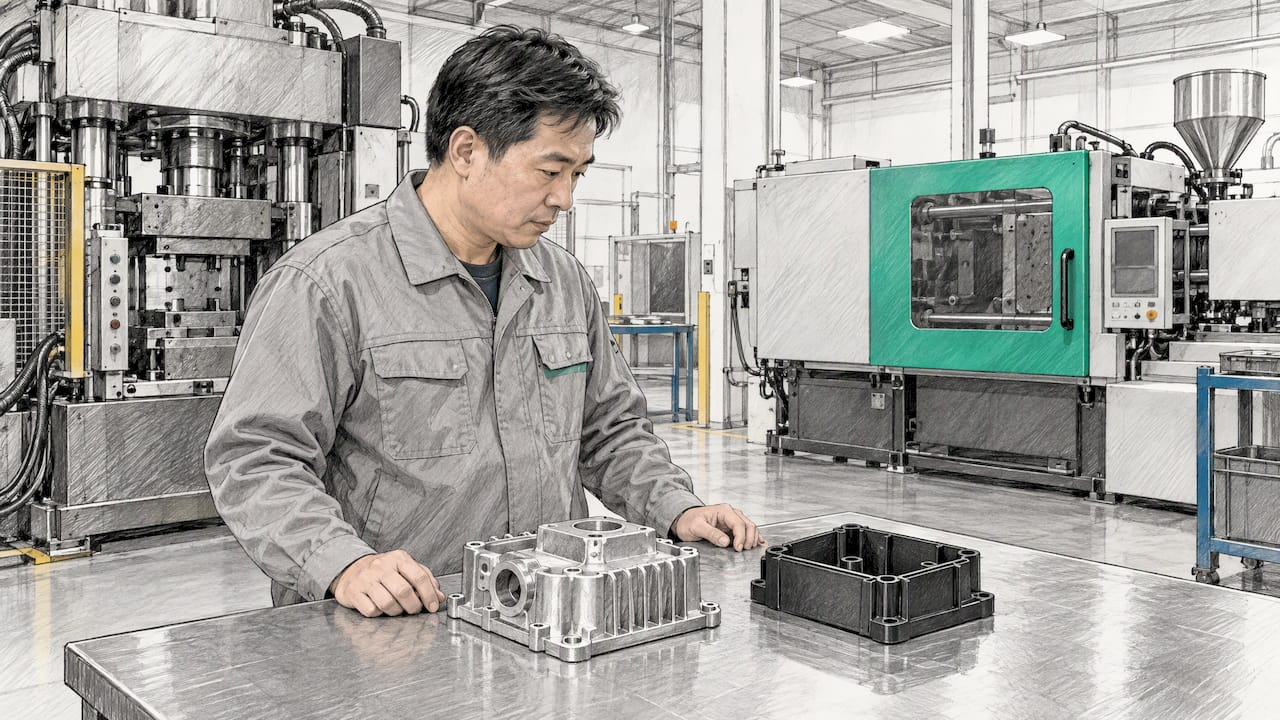
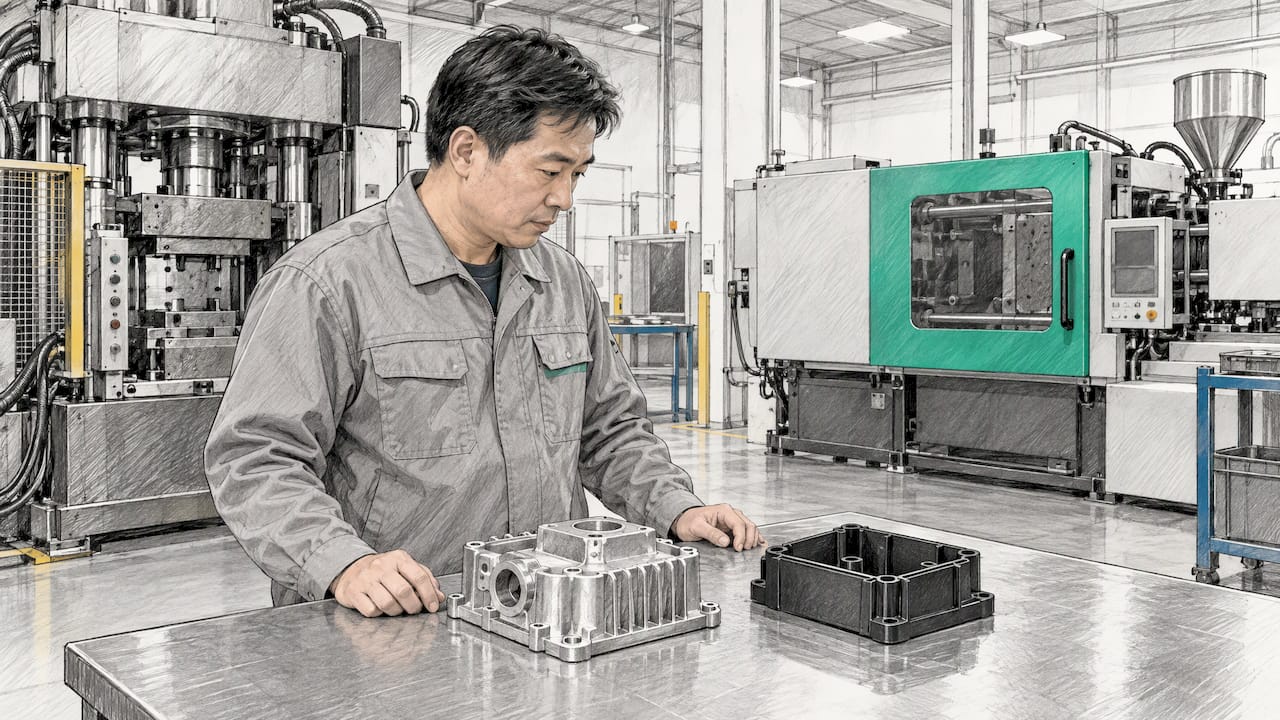
Die casting and injection molding are close cousins: both force material into a steel tool under pressure. The difference is the material. Die casting shapes molten non-ferrous metal such as aluminum, zinc or magnesium. Injection molding shapes plastic. So the choice usually comes down to whether the part must be metal, and then to volume, tooling budget and geometry. For prototypes and short runs, vacuum casting and CNC machining often come before either tool is cut, and we run all of these processes under one roof, so you can compare them on your own part rather than on a general rule.
People use “casting” and “molding” loosely, which is where most of the confusion starts. The U.S. Department of Energy’s design-for-manufacturing module defines casting as pouring molten metal into a mold cavity so it solidifies in the cavity’s shape, and injection molding as forcing heated molten plastic into a cavity mold and ejecting the part once it cools.
In practice:
So is die casting a type of injection molding? Mechanically the process looks almost the same, which is why the question comes up. But the material, the temperatures and the tooling are different enough that the two are bought, designed and quoted as separate processes.
The figures below come from a DFMA cost and design comparison published in March 2026. They are typical ranges, not quotes, and your part will land somewhere inside or outside them.
| Factor | Die casting | Injection molding |
|---|---|---|
| Materials | Aluminum, zinc, magnesium, brass | Thermoplastics, thermosets, elastomers |
| Tooling cost | $5K to $75K+ | $3K to $50K simple, $100K to $300K+ complex |
| Tool life | 50K to 150K shots (aluminum), 500K to 1M+ (zinc) | About 100K (aluminum tool) to 1M+ (hardened steel) |
| Cycle time | 15 to 90 seconds | 20 to 90 seconds |
| Part cost at 100K volume | $0.50 to $3.00 | $0.10 to $2.00 |
| Break-even volume | 10,000 to 50,000 units a year | 1,000 to 10,000 (simple), 10,000 to 50,000 (complex) |
| Minimum wall | 2 mm | 0.8 to 3 mm |
| Draft | 1 to 3 degrees | Per material and finish |
| Undercuts | Limited, side pulls add cost | Extensive, with side pulls or unscrewing cores |
| As-cast tolerance | ±0.002 to 0.005 in | ±0.001 to 0.005 in |
| Surface | Ra 63 to 125, secondary operations common | Molded-in color and texture, often ready to install |
Two things stand out. Cost per part is not where the processes separate most; material is. And the break-even numbers overlap, so volume alone rarely settles it.
Engineering comparison guides such as MFG Calcs make the same point: geometry and material decide before cost does. A part that needs electrical conductivity, EMI shielding, or structural load-bearing above 150°C defaults to die casting. A part where plastic is enough, where low density or integrated color matters, goes to injection molding.
Some examples by sector:
If both materials would work, move to the design and volume questions below.
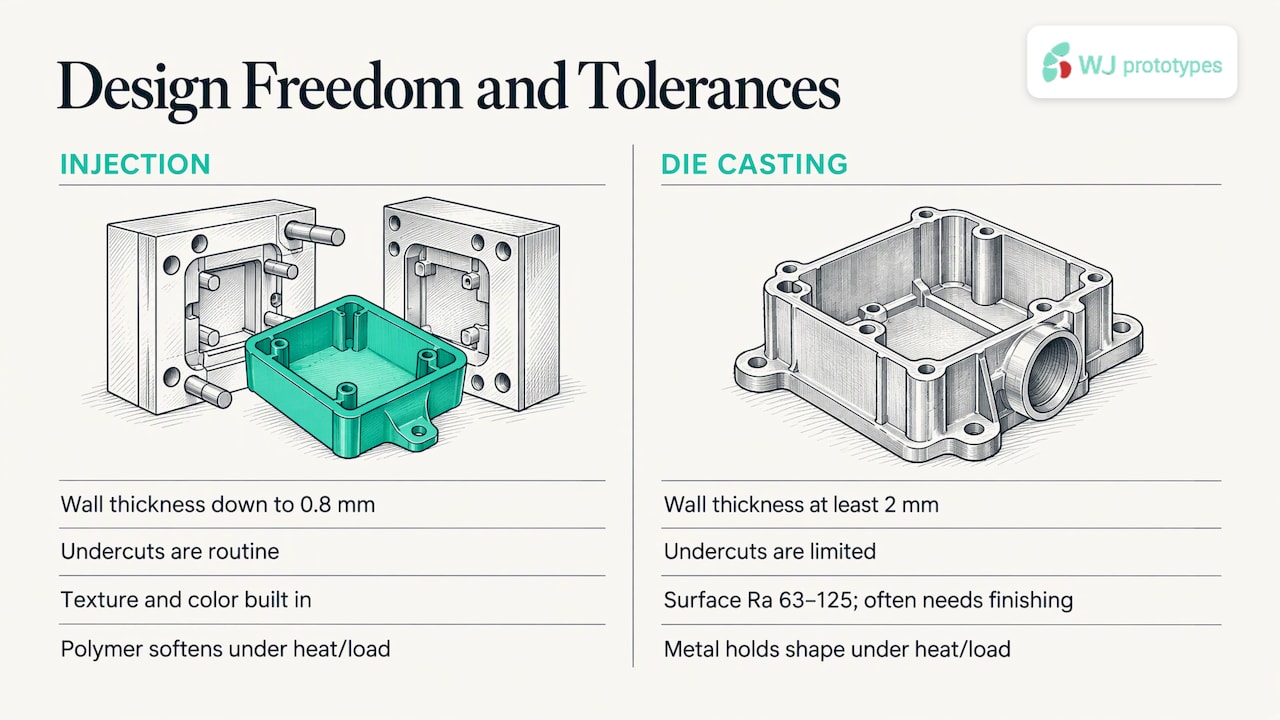
Injection molding gives you more freedom. Walls can go thinner (down to 0.8 mm), undercuts are routine, and parts can come out with texture and color built in. Die casting needs walls of at least 2 mm, 1 to 3 degrees of draft and limited undercuts, and its as-cast surface (Ra 63 to 125) often needs secondary operations such as machining or finishing, per the same DFMA comparison.
The trade is strength and thermal performance. Die cast parts are metal, so they hold geometry under heat and load that would soften a polymer. Our own write-up on why die casting suits high-precision manufacturing goes deeper on that side.
If you are designing for molding, the rules for wall thickness, ribs and gates are in our guide to six things to consider when designing parts for injection molding. Check the resin options on our injection molding materials list before you lock the design.
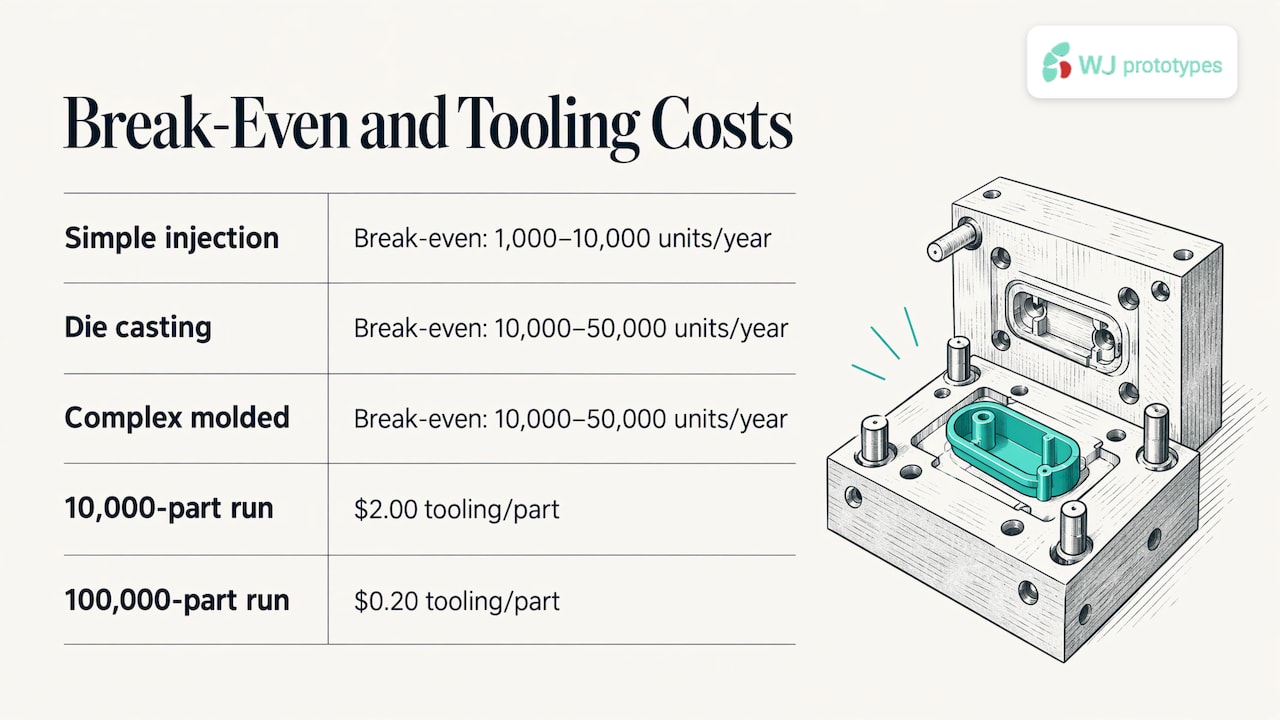
Hard tooling is an up-front cost, so the question is how many parts spread it thin enough. DFMA’s figures put injection molding’s break-even at 1,000 to 10,000 units a year for simple parts. Die casting needs 10,000 to 50,000 to amortize its tooling and machine costs, and the same range applies to complex molded parts.
A worked example. Say a part costs $2.00 to mold in a $20,000 tool and you need 10,000 pieces: tooling adds $2.00 per part, so the real cost is about $4.00 each. At 100,000 pieces, tooling adds $0.20 and the real cost drops to about $2.20. The same logic applies to a die cast tool, only with a higher floor. This is an illustration of the arithmetic, not a quote.
Because part size, cavity count and secondary operations shift the crossover, MFG Calcs advises quoting at three volume tiers rather than trusting one break-even number. For example, ask for prices at 500, 5,000 and 50,000 pieces and compare the curves.
Before committing to a steel tool, many teams bridge with vacuum casting. MFG Calcs frames it as a bridge rather than a destination: use it for roughly 10 to 100 units while the design settles or the injection tool is being cut, then move to injection molding once demand clears a few hundred parts or you need true production resin properties.
The logic is simple:
Urethane casting suits a part when you need a small batch of good-looking, functional units for design validation, fit checks, trade shows or pilot builds. It stops suiting it when silicone molds wear out and quantity climbs, at which point a production tool is the better spend. For process detail, read our guide to vacuum casting and the seven vacuum casting process steps, or see how teams go from prototype to production with vacuum casting.
Machining is the other common alternative for metal parts. DFMA’s process-selection framework places CNC at low volume (roughly 1 to 10,000 pieces), with little dedicated tooling, the highest precision (±0.01 mm) and an expensive piece price. It works best for complex low-volume work.
That makes the choice straightforward:
See our CNC machining materials and CNC design guide if you are planning that route.
Teams in aerospace sourcing low-volume parts often run this exact sequence while preparing RFQ packages. If you sell into that market, aerospace marketing for RFQs is a useful way to understand how procurement teams find suppliers.
The gap between ten prototypes and fifty thousand production parts is where most budgets go wrong. Our article on three proven low-volume manufacturing examples shows how teams cover that gap without paying for a full production tool too early. We have no minimum order quantity, so a single prototype and a short run are both workable orders.
We offer die casting, injection molding, vacuum casting, CNC machining, sheet metal fabrication and 3D printing (SLA, SLS, MJF, FDM and DMLS) from one manufacturer. That matters here because the right process often changes as the project matures. You can machine or print the first units, vacuum cast a pilot batch, and move to injection molding or die casting when the volume is there, with the same dedicated project manager and ISO-certified quality system across stages.
The quickest way to compare is to upload your CAD file to our instant quote system and request the same part in two processes. For the tooled options, see our injection molding service and die casting service. For small batches, see vacuum casting and CNC machining. Pricing is set after we confirm your specification.
Most process-selection mistakes we see on paper come from deciding too early. A team picks die casting because the final part will be aluminum, then discovers the design changes three times and the die is already paid for.
Our approach is to keep the process open until the design is stable. Print or machine the first units. Cast a pilot batch if you need dozens of realistic parts. Cut tooling when the geometry and the volume agree with each other. Because we run additive manufacturing, CNC machining, vacuum casting, injection molding and die casting ourselves, with no minimum order quantity, you are never forced into a tool to get a quote or a prototype.
Ask for the same part in more than one process and compare total program cost. That is the comparison that holds up.
Nas
Die casting injects molten non-ferrous metal, such as aluminum, zinc or magnesium, into a steel die. Injection molding injects molten plastic into a mold. The process steps are similar, but the material, temperatures, tooling and end-use properties differ.
Per DFMA’s 2026 comparison, tooling runs $5K to $75K+ for die casting and $3K to $300K+ for injection molding. Part cost at 100K volume is $0.50 to $3.00 versus $0.10 to $2.00. Injection molding is usually cheaper if plastic meets the requirements.
Use vacuum casting for roughly 10 to 100 units while the design is still changing or the injection tool is being made. Switch to injection molding once demand reaches a few hundred parts or you need the true production resin.
It depends on volume. CNC machining suits low-volume, high-precision parts with little tooling, while die casting wins when thousands of identical metal parts justify the die. Many programs machine the prototypes and cast the production run.
Yes. Upload your CAD file to our instant quote system and tell us your target volumes. Our project managers confirm the specification before pricing is finalized.
SERVICES
RESOURCES