



- Room 1807, Unit 9, Building 2, Shangxing Commercial Street, Shangde Road, Shangxing Community, Xinqiao Subdistrict, Bao'an District, Shenzhen City, China
CONTACT US

WhatsApp


Contact Us
Our team is on stand by, waiting toassist you.

Videos
A large collection of educational videos and tutorials.

About Us
Learn about our company, leadership, and mission totransform manufacturing.

Privacy Policy
Applies to all personal information collected through and/or processed in connection.
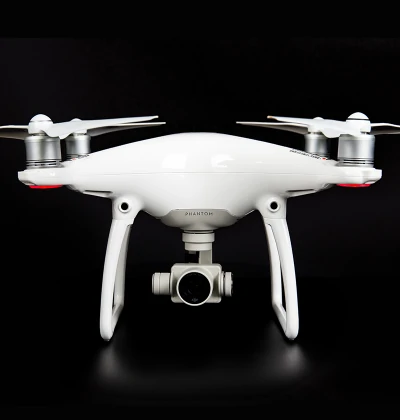

Aerospace & UAV
WJ Prototypes is your 3D manufacturing partner from prototype to large scale production.

Consumer Electronics
New Product Introduction Solutions for Consumer Electronics.

Robotics & Automation
Need some assistance bringing your robotic device or parts from the sketch-board to reality?

Medical Devices
The medical industry needs high quality, dependable and safe parts and products.

Automotive
New Product Introduction Solutions for Automotive

Industrial Machinery
The main purpose of industrial prototyping is to take the product from drawings into the real world.


Sourcing prototypes in Shenzhen is safe when you treat it as a process with gates: verify the factory, send an identical RFQ to every shortlisted supplier, sign IP protection before any file leaves your hands, tie payment to inspection, and validate with a controlled first order. At WJ Prototypes, a China-based manufacturer with ISO certification, no minimum order quantity and a dedicated project manager on each job, this is how we think the process should run for U.S. engineering teams.
Shenzhen concentrates 3D printing, CNC machining, sheet metal, vacuum casting and tooling shops within one supply region, which is why a part can go from file to finished sample in days. The same density is what makes vetting hard. Many companies that look like factories are trading offices that subcontract the work, and a quote that looks cheap can hide missing finishes, a loose tolerance interpretation or a payment structure that leaves you without leverage.
The failures that cost U.S. teams the most are rarely about the part itself. They are a design file shared with no agreement in place, a 100% prepayment to an account that does not match the contracting entity, or a first order that was never validated before the second one scaled up. Each step below targets one of those.
Start with who actually makes your part. Yucheng IP Law, a firm that advises foreign buyers in China, stresses 100% in-house production as non-negotiable for sensitive design files, because an NNN agreement does not automatically bind a subcontractor. If a supplier outsources finishing or machining, your file travels to a company you never vetted.
Then make capability claims specific. According to TCT Asia’s guide to evaluating Chinese additive manufacturing suppliers, a claim such as holding ±0.1 mm is only complete when the supplier states the process, material, part size, geometry, measurement method and post-processing state. Use that as your template. Ask for the tolerance your part needs, in the material you need, on a part of comparable size, and how it is measured.
Certifications need the same precision. The same TCT Asia guide separates equipment certification, company quality certification and process qualification for a specific part, and advises asking which product, process, facility and scope a certificate covers. Yucheng IP Law adds that ISO 9001 certifies a documented quality management system, not the quality of any particular part. Sector standards such as ISO 13485 for medical, AS9100 for aerospace and IATF 16949 for automotive carry real weight in those fields. For commercial prototyping, a track record of dimensional inspection reports, first article inspection (FAI) documentation and material certifications is the most meaningful evidence.
Two indicators are easy to request and hard to fake:
Our approach at WJ Prototypes is to match the process to the part. SLA, SLS, MJF, DMLS and FDM 3D printing, CNC machining, sheet metal, vacuum casting, injection molding and die casting all sit under one roof of services, so a part that moves from a printed form-and-fit model to a machined or cast functional prototype stays with the same team. Our guide on what to look for in a reliable rapid prototyping partner goes deeper on the criteria.
A vague request gets vague quotes. Shenzhen Makers, a sourcing guide site, recommends sending the same package to three to five suppliers. Treat its list as a checklist and confirm details with your own engineering team:
| RFQ item | What to include | Why it matters |
|---|---|---|
| 3D model | STEP file | Neutral format every shop can open |
| 2D drawing | PDF with material, finish, critical dimensions and tolerances | Removes guesswork on what is critical |
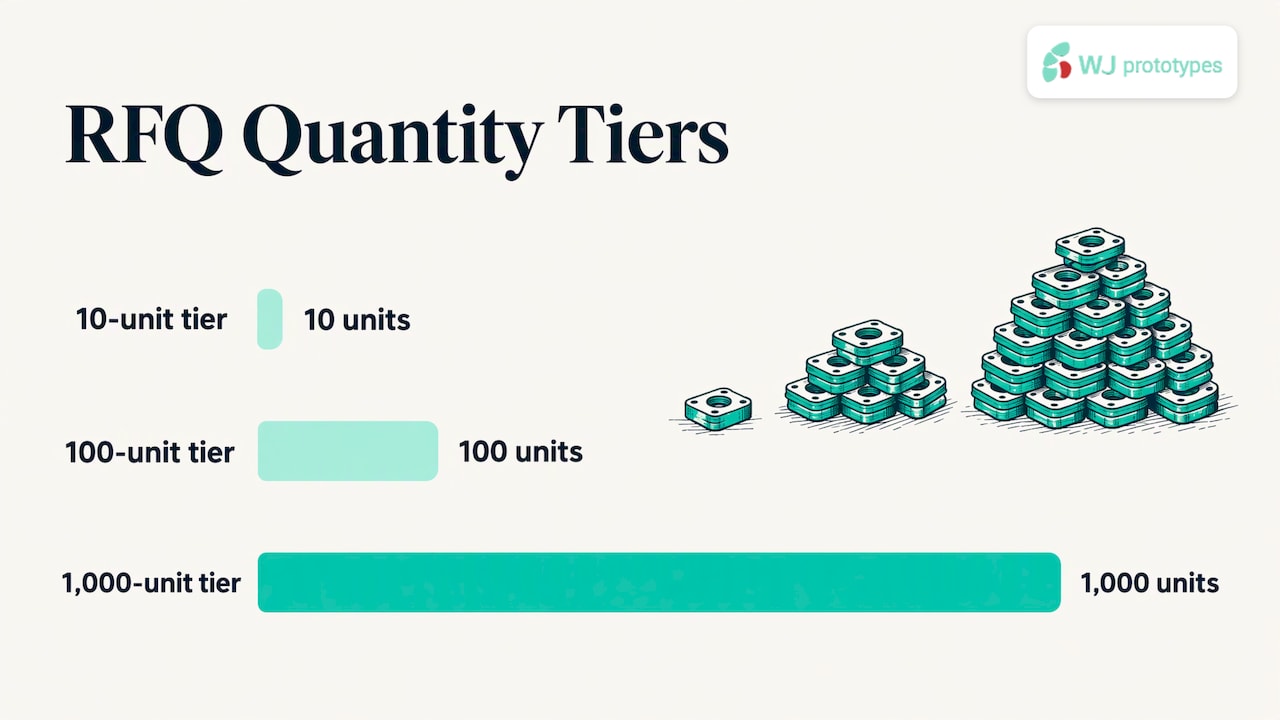
| Quantities | Two or three levels, such as 10, 100 and 1,000 | Shows how unit price drops with volume |
| Material and finish | Named grade and finish, not “plastic” or “polished” | Prevents substitutions |
| Quality requirements | Inspection reports, certificates needed | Sets acceptance criteria up front |
| Delivery | City, country and Incoterm (for example FOB Shenzhen) | Defines who pays for and controls freight |
| Quote format | Itemized tooling, unit prices, lead times, MOQ, payment terms, validity, DFM comments | Lets you compare line by line |
Compare on more than price. A supplier that returns DFM comments, such as a wall that is too thin for casting or a tolerance that will drive machining cost, is showing it has read the drawing. Material choice also changes cost and lead time, so settle it early using our overview of material selection for prototyping from China.
When you are ready to compare, our online instant quote system lets you submit a file and specifications, and prices are set after the specification is confirmed. There is no minimum order quantity, so a single prototype is a normal order. For budgeting before you quote, see rapid prototyping cost and timelines in China.
Do this before the RFQ goes out, not after you pick a supplier. The U.S. Patent and Trademark Office’s China IP toolkit states that registering IP rights in the United States does not give you rights in China. It recommends NDAs with secrecy and nonuse obligations, audit rights, and post-relationship controls governed by PRC law and written in Chinese. It also suggests sharing proprietary information on a need-to-know basis and keeping vital designs or latest-generation technology in the United States.
The practical instrument is an NNN agreement (non-disclosure, non-use, non-circumvention). Legal 500 advises signing it before sending any CAD file, BOM, sample or pricing sheet. The non-use clause stops the factory from making competing products, and non-circumvention stops it from selling to your customers directly. A China-law practice explains that a sound NNN identifies the Chinese entity by its registered Chinese name, binds employees, affiliates and subcontractors who may receive the information, and includes a realistic dispute-resolution clause and liquidated damages.
One more point for hardware founders: China registers IP on a first-to-file basis. Pseeing’s founder guide calls registering with CNIPA before sharing production files the most common and irreversible mistake overseas founders make, since a third party can file your enclosure design first. Ask your IP counsel whether a design patent or trademark filing in China makes sense for your product before production files go out.
Tactical habits help too. Split a sensitive assembly so no single supplier holds the full design, and send only the files each process needs. Our own articles cover this in depth: protecting your IP in China and an IP protection checklist for rapid prototyping.

The common structure in China is a 30% deposit and 70% before shipment. Harris Sliwoski, a law firm that handles China manufacturing contracts, warns that this leaves the buyer little leverage after shipment. It recommends holding back part of the price until after destination inspection or a defined post-arrival period, and specifying daily late-delivery damages, cancellation and cover rights in the contract.
The same source is firm on one rule: pay only to the approved bank account of the contracting Chinese company, never to a personal, broker or related-company account. Match the account name against the legal entity on your contract and NNN before any wire.
Pseeing’s guide adds that you should never pay 100% upfront, that a final inspection should be the release gate for the last payment, and that escrow or letter-of-credit structures can be worth the fee on larger programs. For a prototype order, a deposit with the balance released after you approve inspection results is a reasonable pattern. Have a contract lawyer who knows PRC law review anything above a small sample order.
Write acceptance criteria before the quote is final: which dimensions are critical, how they are measured, what surface finish is acceptable and which documents come with the parts. Ask for a dimensional inspection report and material certification with each shipment, and for FAI documentation on parts that will go to production.
TCT Asia’s three-stage method is a good model for validation. First, shortlist suppliers by capability against your part’s process, material, tolerance and certification needs. Second, test repeatability by examining several parts from the same batch and asking about the process window, such as the qualified powder-reuse count for metal, instead of nominal specs. Third, run two controlled orders separated in time, test the hardest feature and define acceptance criteria before the quotation is final.
Why two orders? One good batch shows a supplier can hit your tolerance once. A second batch weeks later shows the process is repeatable, which is what you need before tooling or a production run. Put the hardest feature of the part, a thin wall, a tight bore or a cosmetic surface, into this pilot on purpose.
Watch for these warning signs during the process:
Decide the Incoterm in the RFQ, because it sets who books freight and who clears customs. Under FOB Shenzhen, for example, you take responsibility once the goods are loaded, so you need a forwarder or broker on the U.S. side.
For commercial shipments, the value matters. A freight guide notes that formal entries, in practice commercial shipments of $2,500 or more, require a customs bond, while smaller shipments usually clear on an informal entry without one. Tariff treatment depends on the HTS classification of your part and changes over time, so ask your customs broker to classify the part and confirm duty rates against the official U.S. tariff schedule before you ship. Declare the true value on the commercial invoice, including for prototypes, and keep the invoice, packing list and HTS code consistent with each other.
Build the time into your schedule. Fast manufacturing does not help if the parts sit in a customs queue, so for design-review dates, count manufacturing, transit and clearance separately.
Most sourcing risk comes from handoffs: a trading company passing your file to a workshop, a finishing step done somewhere you never saw, a quote built on assumptions nobody wrote down.
We built WJ Prototypes around the opposite idea. Additive manufacturing (SLA, SLS, MJF, DMLS, FDM) and traditional fabrication (CNC machining, sheet metal, vacuum casting, injection molding, die casting) are offered together, so a design can move from a printed concept model to a functional prototype or a low-volume run without being re-quoted and re-explained to a new vendor each time. Every project has a dedicated project manager, so someone owns the questions about tolerance, material and finish from the first quote through delivery.
We hold ISO certification and we do not set a minimum order quantity, which means an engineer can order one part to validate a design and scale up only when the results justify it. That is the pilot-order logic described above, built into how we work. Our engineers serve aerospace, automotive, medical, electronics, robotics, oil and gas and industrial machinery clients, where documented quality matters as much as speed.
The safest supplier relationship is one where specifications, files and responsibilities are all written down and held in one place.
Nas
If you are ready to put the steps above into practice, send your STEP file and drawing through our instant quote system. For metal parts that need tight tolerances, look at CNC machining. For complex geometry in plastic or metal without tooling, see our 3D printing services. For functional units in small batches, vacuum casting and injection molding bridge prototype and production. Our guide to choosing prototyping services from China can help you pick a process first.
Use an NNN agreement written for China, ideally governed by PRC law and enforceable against the Chinese legal entity that will make your parts. It adds non-use and non-circumvention to ordinary confidentiality, which addresses competing products and direct sales to your customers. Sign it before sending any CAD file, BOM or sample.
A 30% deposit with the balance before shipment is the common pattern, but never pay 100% upfront. Safer terms release the final payment after inspection, and larger programs can justify escrow or a letter of credit. Always pay the contracting company’s own approved bank account.
Three to five is a workable range. Send each the same package: STEP model, drawing with tolerances, material and finish, quantity tiers, Incoterm and a request for DFM comments. Identical inputs are what make the quotes comparable.
No. ISO 9001 certifies a documented quality management system, not the quality of a specific part. Pair it with dimensional inspection reports, material certifications and, for regulated sectors, the relevant standard such as ISO 13485, AS9100 or IATF 16949.
You need a commercial invoice, a packing list, the correct HTS classification and usually a customs broker or forwarder. Commercial shipments of $2,500 or more generally need a customs bond. Confirm duties with a licensed customs broker before shipping.
SERVICES
RESOURCES