



- Room 1807, Unit 9, Building 2, Shangxing Commercial Street, Shangde Road, Shangxing Community, Xinqiao Subdistrict, Bao'an District, Shenzhen City, China
CONTACT US

WhatsApp


Contact Us
Our team is on stand by, waiting toassist you.

Videos
A large collection of educational videos and tutorials.

About Us
Learn about our company, leadership, and mission totransform manufacturing.

Privacy Policy
Applies to all personal information collected through and/or processed in connection.
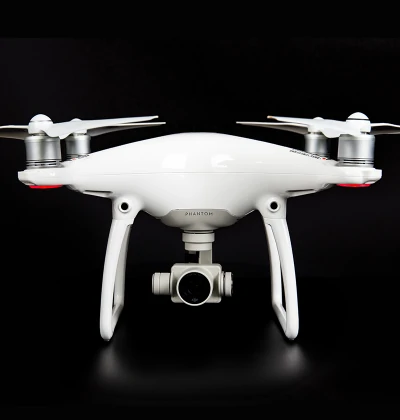

Aerospace & UAV
WJ Prototypes is your 3D manufacturing partner from prototype to large scale production.

Consumer Electronics
New Product Introduction Solutions for Consumer Electronics.

Robotics & Automation
Need some assistance bringing your robotic device or parts from the sketch-board to reality?

Medical Devices
The medical industry needs high quality, dependable and safe parts and products.

Automotive
New Product Introduction Solutions for Automotive

Industrial Machinery
The main purpose of industrial prototyping is to take the product from drawings into the real world.


TL;DR:
- Precision engineering ensures components meet exact tolerances for safety and performance.
- Early integration of precision in design accelerates prototyping and reduces costly rework.
- Effective supplier communication and culture are crucial for consistent, high-quality precision parts.
A single degree of angular misalignment in a turbine blade. A 0.02 mm oversize on a spinal implant bore. These aren’t hypothetical problems — they’re the kinds of deviations that have grounded aircraft, triggered costly product recalls, and sent development timelines spiraling by months. Precision engineering is not a premium add-on for demanding industries; it’s the structural foundation every successful product development cycle is built on. This article breaks down what precision engineering actually means, where it genuinely matters, how it affects your prototyping and manufacturing outcomes, and what you should demand from every supplier in your chain.
| Point | Details |
|---|---|
| Precision prevents costly errors | Micron-level accuracy ensures products pass regulatory and performance benchmarks every time. |
| Best methods for tight tolerances | CNC machining, Swiss turning, and grinding deliver consistent quality for demanding sectors. |
| Quality starts in prototyping | Investing in precision at the prototyping stage reduces delays and design iterations downstream. |
| Vendor collaboration is vital | Clear, ongoing communication with suppliers secures reliable, precise production. |
Precision engineering is the discipline of designing and manufacturing components to extremely tight dimensional tolerances, ensuring that every part behaves exactly as intended under real operating conditions. It’s not just about hitting a number on a drawing. It’s about repeatability, consistency, and complete control over every variable that influences a part’s final geometry and surface condition.
The role of precision engineering extends across nearly every safety-critical and performance-driven industry. In aerospace, airframe and propulsion components must meet tolerances measured in microns to maintain structural integrity at altitude. In automotive, powertrain tolerances directly affect fuel efficiency, noise levels, and longevity. In medical devices, implants must interface flawlessly with human bone and tissue, where even minor geometric variation can cause inflammation or implant failure. For rapid prototyping teams, precision is the bridge between a validated concept and a manufacturable product.
One common misconception in procurement is that “close enough” tolerances are acceptable as long as parts look right and assemble easily. That logic fails fast in functional testing. A component that assembles smoothly in a clean lab environment may fail under thermal cycling, vibration load, or fluid pressure. Precision engineering eliminates that gap between static fit and dynamic performance.
Key methodologies used in precision manufacturing include:
The methodologies behind these processes cover a wide range of capabilities: CNC machining at ±0.005 to 0.01 mm, precision grinding at ±0.001 to 0.005 mm, and Swiss turning delivering up to 60 to 70% cycle time reduction compared to conventional turning.
Surface finish values like Ra 0.4 µm or better are not just cosmetic specs — in medical implants and aerospace sealing surfaces, they directly determine whether a part passes or fails functional qualification.
When precision is treated as a late-stage concern, the consequences are predictable and expensive. Tolerances that were never formally specified get interpreted differently by the machinist, the QA team, and the design engineer. The result is a domino effect: the prototype doesn’t validate correctly, testing is delayed, design revisions multiply, and your launch window closes. This cycle is frustratingly common and almost entirely avoidable.

Precision in prototyping must begin at the design stage, not after the first parts come back from the shop. Every prototyping milestone that depends on dimensional accuracy should carry a clearly defined tolerance stack, surface finish requirement, and material specification. When those inputs are clear from day one, the path from CAD to qualified prototype becomes dramatically more direct.
Here’s how standard versus precision-driven prototyping compares in practice:
| Factor | Standard prototyping | Precision-driven prototyping |
|---|---|---|
| Tolerance specification | General, often assumed | Explicitly defined per feature |
| Lead time risk | High, revisions common | Lower, first-article acceptance rates higher |
| Cost per iteration | Lower upfront, higher total | Higher upfront, lower total |
| Quality risk | Moderate to high | Low to minimal |
| Regulatory compliance readiness | Requires rework | Built-in from the start |
| Time to validation sign-off | Extended | Compressed |
The upfront investment in precision pays back across every subsequent phase of development. A part that passes first-article inspection the first time doesn’t just save the cost of remachining. It protects your schedule, your supplier relationships, and your internal credibility with stakeholders.
Pro Tip: Document your tolerance and surface finish requirements in a formal drawing package before issuing any RFQ. Verbal or email-based specifications are the single biggest source of prototyping rework we see across new client projects.
The prototyping steps that benefit most from a precision-first approach are:
According to data on prototyping for manufacturing, teams that integrate precision requirements early in the prototyping cycle consistently compress their overall development timelines. The Swiss turning process alone can achieve 60 to 70% cycle time reductions in complex turned part families, which translates directly to faster prototype delivery and more iteration cycles within the same budget window.
Precision engineering and manufacturing quality are inseparable. A well-specified part manufactured without precision control will fail compliance audits, generate scrap, and introduce failure modes that no amount of downstream inspection can catch and fix at a reasonable cost.
In regulated industries, the connection between precision and compliance is explicit. FDA and aerospace certification bodies require documented evidence that manufacturing processes can consistently produce parts within specification. That means process capability data, not just inspection results. A process that hits spec 95% of the time is not acceptable when the application is a cardiac device or a flight-critical fastener.
Precision grinding achieves Ra 0.1 to 0.4 µm surface finish and tolerances as tight as ±0.001 mm, which sets the standard for implant-grade and sealing surface applications. That level of finish is not achievable through standard milling or turning without secondary operations, and skipping it introduces real risk.
Here’s how manufacturing method precision capabilities compare across common processes:
| Process | Typical tolerance | Surface finish (Ra) | Best application |
|---|---|---|---|
| CNC milling | ±0.005 to 0.01 mm | Ra 0.8 to 1.6 µm | Structural, functional parts |
| Precision grinding | ±0.001 to 0.005 mm | Ra 0.1 to 0.4 µm | Implants, sealing surfaces |
| Swiss turning | ±0.002 to 0.005 mm | Ra 0.4 to 0.8 µm | Small precision components |
| EDM (wire/sinker) | ±0.002 to 0.005 mm | Ra 0.2 to 0.8 µm | Complex cavities, molds |
| Hard turning | ±0.003 to 0.008 mm | Ra 0.4 to 0.8 µm | Post-hardened steel parts |
The failure modes linked to poor precision are not minor inconveniences. They include:
Understanding quality control in CNC machining means recognizing that precision isn’t just about measurement — it’s about building a manufacturing system where deviation is detected early and corrected systematically.
Surface finish is not just an aesthetic spec. In high-cycle loading environments, an Ra value that’s two grades coarser than specified can cut fatigue life by 30 to 40%, a factor that no safety margin in the design should be expected to absorb.
For teams working with abrasive finishing or blast cleaning on precision surfaces, it’s worth reviewing guidance on industrial blasting and precision to ensure post-processing doesn’t undo the geometric accuracy achieved in machining.
Knowing why precision matters is useful. Knowing how to reliably source and manage it is what separates teams that ship great products from teams that spend their budget on rework and expediting fees.
Selecting the right precision manufacturing partner requires more than reviewing a capability brochure. The following steps give you a structured approach:
Common procurement pitfalls that undermine precision outcomes include:
Pro Tip: Build a short technical questionnaire into your vendor onboarding process. Ask specifically about how they handle out-of-tolerance conditions, what their corrective action process looks like, and how they communicate deviations to customers before parts ship.
Understanding CNC machining for precision includes recognizing that multi-axis CNC and Swiss turning excel for complex, high-precision parts where setup consistency and reduced part handling are critical to achieving repeatable tolerance control. For teams exploring offshore sourcing options, reviewing what sourcing precision engineering in China involves from a vetting and quality assurance perspective is a practical starting point.
Here’s a perspective that rarely makes it into supplier marketing materials or industry guides: the teams that consistently produce world-class precision parts are not necessarily the ones with the most advanced equipment. They’re the ones with the most disciplined culture of communication.
We’ve seen it repeatedly. A buyer sends out a drawing with every tolerance perfectly specified, selects a technically qualified supplier, and still ends up with a part that misses the mark. Not because the machines weren’t capable, but because somewhere between the design team’s intent and the machinist’s setup, a critical assumption wasn’t questioned. A chamfer was interpreted differently. A datum reference wasn’t inspected in the right sequence. A surface finish was measured in the wrong direction relative to the machining lay.
Obsessing over microns while neglecting the human process around them is the most expensive mistake in precision procurement. Integration across design, prototyping, quality assurance, and manufacturing isn’t a project management nicety — it’s the mechanism through which tight tolerances actually get achieved and maintained.
The hidden engine behind consistent precision outcomes is a culture of structured feedback and iterative improvement. Successful buyers don’t just send drawings and wait for parts. They create formal feedback loops: first-article reviews where the supplier walks through inspection results and flags any features that are difficult to hold, design reviews where manufacturing engineers can push back on features that introduce unnecessary variation, and post-delivery reviews that track trends across batches.
The best partnerships we’ve seen reflect this principle: China’s approach to precision at its best is not cheap machining with tolerances bolted on — it’s experienced process engineers working collaboratively with your design team to make sure every drawing feature is both achievable and inspectable at scale.
A world-class part is a result of both specification and conversation. Buyers who treat their precision suppliers as execution vendors will always spend more, wait longer, and iterate more often than buyers who treat them as technical partners from day one.
Translating the principles in this article into real product outcomes requires a manufacturing partner who brings both technical depth and process discipline to every project. At WJ Prototypes, we work with product development and procurement teams across aerospace, medical, and automotive sectors to deliver tight-tolerance components from rapid prototype through to low-volume production. Our ISO-certified facilities, experienced engineers, and documented quality processes are built to support your qualification requirements, not just your delivery schedule. Start by reviewing our CNC machining materials to match your part requirements with the right material and process combination. When you’re ready to move forward, our CNC services in China team can provide an instant quote with full tolerance and surface finish documentation included.
A tolerance of ±0.001 to 0.01 mm is considered tight for most medical, aerospace, and advanced automotive applications, with precision grinding at ±0.001 mm representing the high end of standard production capability.
Precision grinding, CNC machining, and Swiss turning are the primary processes for ultra-precise work, with CNC at ±0.005 to 0.01 mm and grinding at ±0.001 mm covering the majority of regulated-industry requirements.
A surface finish of Ra 0.1 to 0.4 µm, typical of precision grinding applications, improves mating surface contact, reduces friction-driven wear, and eliminates the stress concentrators that initiate fatigue cracks in cyclic-load environments.
Beyond defect reduction, processes like Swiss turning deliver 60 to 70% cycle time reductions, which cuts per-part cost significantly on high-volume or time-critical prototype runs and frees budget for additional design iterations.
SERVICES
RESOURCES