



- Room 1807, Unit 9, Building 2, Shangxing Commercial Street, Shangde Road, Shangxing Community, Xinqiao Subdistrict, Bao'an District, Shenzhen City, China
CONTACT US

WhatsApp


Contact Us
Our team is on stand by, waiting toassist you.

Videos
A large collection of educational videos and tutorials.

About Us
Learn about our company, leadership, and mission totransform manufacturing.

Privacy Policy
Applies to all personal information collected through and/or processed in connection.
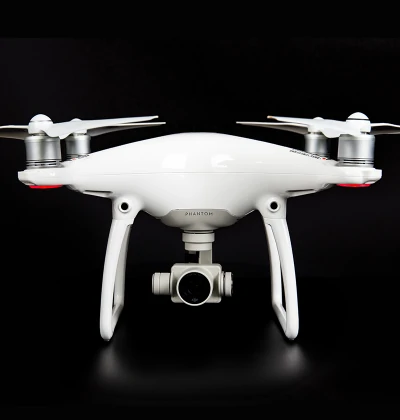

Aerospace & UAV
WJ Prototypes is your 3D manufacturing partner from prototype to large scale production.

Consumer Electronics
New Product Introduction Solutions for Consumer Electronics.

Robotics & Automation
Need some assistance bringing your robotic device or parts from the sketch-board to reality?

Medical Devices
The medical industry needs high quality, dependable and safe parts and products.

Automotive
New Product Introduction Solutions for Automotive

Industrial Machinery
The main purpose of industrial prototyping is to take the product from drawings into the real world.


Product designers and engineers often treat prototyping and production as interchangeable phases, but this confusion can derail timelines, inflate costs, and compromise quality in aerospace, automotive, medical, and robotics projects. Prototyping validates concepts through iterative testing, while production scales finalized designs for market deployment. Understanding these distinct phases helps teams allocate resources effectively, select appropriate manufacturing methods, and transition smoothly from concept to commercial product. This guide clarifies the fundamental differences, explores technologies for each phase, and provides actionable strategies for managing the critical transition between prototyping and production.
| Point | Details |
|---|---|
| Distinct purposes | Prototyping validates design concepts while production focuses on scalable manufacturing efficiency. |
| Material differences | Prototypes use flexible, cost-effective materials whereas production requires industry-grade materials meeting regulatory standards. |
| Cost structures vary | Prototyping has higher per-unit costs but lower total investment compared to fixing production errors later. |
| Technology choices | Additive manufacturing dominates prototyping while automated processes drive production scalability. |
| Transition planning | Early collaboration between prototyping and production teams prevents costly delays and quality issues. |
Prototyping is the preliminary phase focusing on design validation and iterative testing before manufacturing. This stage creates early versions to test form, fit, and function, allowing engineers to identify design flaws, evaluate material performance, and refine concepts before committing to expensive production tooling. In aerospace applications, prototypes might test aerodynamic properties or structural integrity under simulated flight conditions. Medical device prototypes verify biocompatibility and user interface design before regulatory submission.
Production entails large-scale manufacturing of finalized designs with emphasis on repeatability, quality control, and cost efficiency. This phase implements standardized processes to produce thousands or millions of identical units meeting strict specifications. Production teams focus on minimizing defects, optimizing cycle times, and maintaining consistent quality across every unit. The transition from prototype to production represents a fundamental shift from exploration to execution.
Each sector shapes these phases distinctly based on regulatory requirements and performance demands. Aerospace prototyping emphasizes lightweight materials and stress testing, while automotive prototypes prioritize crash safety and thermal management. Medical device prototyping must demonstrate biocompatibility and sterilization compatibility early. Robotics prototypes focus on motion control and sensor integration before production scaling.
Common prototyping methods include:
Production processes prioritize repeatability through injection molding for high-volume plastics, automated CNC machining cells for consistent metal parts, and die casting for complex metal components. Quality control systems monitor every production run, implementing statistical process control to catch deviations before they affect multiple units. Documentation requirements increase dramatically in production, with traceability systems tracking every component from raw material to finished product.
Prototype materials prioritize ease of modification and lower initial costs over long-term durability. Engineers often select materials that machine easily or print quickly, even if these materials differ from final production specifications. A medical device prototype might use standard ABS plastic for ergonomic testing, while the production version requires medical-grade polycarbonate meeting ISO 10993 biocompatibility standards. This material selection flexibility accelerates learning but requires careful planning for eventual material transitions.
Production demands materials meeting rigorous industry standards and regulatory requirements. Aerospace components require materials with documented traceability, certified mechanical properties, and proven performance in extreme conditions. Automotive production materials must withstand temperature cycling, UV exposure, and chemical resistance over years of service. These material requirements often increase costs substantially compared to prototype materials, but they ensure reliability and compliance with safety regulations.

Goals diverge fundamentally between phases. Prototyping focuses on answering specific questions about design feasibility, user experience, or technical performance. Each prototype iteration targets particular uncertainties, with teams deliberately building multiple versions to explore alternatives. Production eliminates variation, standardizing every process to deliver identical products consistently. Success in prototyping means learning quickly, while production success means executing flawlessly at scale.
Timelines reflect these different priorities. Prototyping cycles compress into days or weeks, with rapid iteration enabling teams to test multiple concepts before committing to a direction. A robotics team might produce five gripper prototypes in two weeks, testing each design with different payloads and motion profiles. Production timelines extend across months, incorporating tooling fabrication, process validation, and supply chain coordination. The first production run might take three months from approval to delivery, but subsequent runs execute in days once processes stabilize.
Cost structures reveal why prototyping reduces overall expenses despite higher per-unit costs. A CNC machined prototype part might cost 500 dollars compared to 5 dollars for an injection molded production part, but discovering a design flaw during prototyping costs thousands rather than millions. Production tooling for injection molding can exceed 50,000 dollars for complex parts, making design changes after tooling fabrication prohibitively expensive. Prototyping absorbs higher unit costs to minimize total project risk.
| Aspect | Prototyping | Production | | — | — | | Primary goal | Validate concepts and identify issues | Manufacture at scale with consistency | | Material focus | Ease of modification and speed | Compliance and long-term performance | | Typical quantity | 1 to 50 units | Hundreds to millions of units | | Per-unit cost | High but acceptable | Must be minimized for profitability | | Timeline priority | Rapid iteration cycles | Efficient throughput and reliability | | Quality emphasis | Functional validation | Zero-defect manufacturing |
Pro Tip: Document every material substitution and design modification during prototyping to streamline production planning and avoid surprises during scale-up.
Quality standards escalate dramatically in production. Prototypes might accept minor cosmetic flaws or dimensional variations if they don’t affect functional testing. Production parts must meet specified tolerances consistently, with statistical process control monitoring critical dimensions on every part. Aerospace production might require 100% inspection of certain features, while medical device production implements validated processes ensuring sterility and biocompatibility across every batch.
Prototyping technologies prioritize flexibility and speed over unit cost efficiency. Additive manufacturing methods like SLA, SLS, and MJF enable complex geometries without tooling investment, making them ideal for initial concept validation. Engineers can modify CAD files and produce updated parts within hours, accelerating the learning cycle. CNC machining serves prototyping when material properties matter more than cost, allowing teams to test designs in production-grade metals and engineering plastics before committing to production tooling.
Vacuum casting bridges prototyping and low-volume production by creating multiple copies from silicone molds. This industrial prototyping process produces 10 to 25 parts with consistent quality, supporting user testing, trade show demonstrations, or initial market validation. The process replicates fine details and allows material selection matching production properties, giving stakeholders realistic representations before production investment.
Production technologies emphasize repeatability and throughput. Injection molding dominates high-volume plastic production, with automated cells producing thousands of parts daily once tooling is validated. Multi-cavity molds increase efficiency by producing multiple parts per cycle, while hot runner systems minimize material waste. CNC machining scales to production through automated work cells with robotic part loading, tool change systems, and in-process inspection.
Key prototyping technologies and their applications:
Production process selection depends on volume requirements, material specifications, and quality standards. Low-volume production might continue using CNC machining or additive manufacturing if tooling costs outweigh per-unit savings. High-volume production justifies significant tooling investment because cost per part drops dramatically at scale. A part costing 50 dollars in CNC machining might cost 2 dollars in injection molding after amortizing 75,000 dollars in tooling over 50,000 units.
| Process type | Prototyping advantage | Production advantage | Best use case |
|---|---|---|---|
| 3D printing | No tooling required, rapid iteration | Limited to specific applications | Complex geometries, low quantities |
| CNC machining | Production-grade materials available | Scalable with automation | Metal parts, tight tolerances |
| Vacuum casting | Multiple copies from one master | Not cost-effective at high volume | Pre-production validation batches |
| Injection molding | Rarely used for prototypes | Lowest per-unit cost at scale | High-volume plastic components |
| Die casting | Too expensive for prototypes | Excellent for complex metal parts | Automotive and aerospace production |
Precision engineering during prototyping ensures production readiness by validating critical dimensions, surface finishes, and assembly interfaces before tooling investment. Engineers should prototype parts using processes that replicate production constraints when possible. A prototype machined to production tolerances reveals potential manufacturing challenges early, while a loosely toleranced prototype might hide issues that surface during production scale-up.

Pro Tip: Select prototyping processes matching production material families even if exact grades differ, ensuring mechanical properties and processing behaviors translate predictably to production.
Automation transforms production economics but rarely applies to prototyping. Robotic assembly cells, automated inspection systems, and material handling equipment require significant programming and setup time, making them impractical for small prototype batches. Production volumes justify this investment by distributing setup costs across thousands of units while improving consistency and reducing labor costs.
Scaling production quality from prototype standards requires systematic process validation and documentation. Teams must translate prototype learnings into manufacturing specifications covering materials, processes, inspection criteria, and acceptance standards. A prototype that “works” must become a production part with defined tolerances, surface finish requirements, and functional test procedures. This translation often reveals assumptions made during prototyping that don’t scale to production volumes.
Material substitutions present common transition challenges when prototype materials differ from production specifications. Engineers must verify that production materials deliver equivalent or superior performance in all critical applications. A medical device prototype tested in one plastic grade requires revalidation if production uses a different material, even within the same polymer family. Mechanical properties, sterilization compatibility, and long-term stability may vary enough to affect device performance or regulatory compliance.
Supply chain readiness determines whether production can meet volume and timeline targets. Prototype suppliers often lack capacity or quality systems for production volumes, requiring teams to qualify new vendors. Production suppliers need documented quality management systems, material traceability, and capacity to handle demand fluctuations. Streamlining inventory and workflow management becomes critical as component counts and supplier relationships multiply during production scale-up.
Key considerations for successful transitions include:
Maintaining design intent during scale-up requires clear communication of critical features and performance requirements. Production engineers must understand which dimensions affect function versus aesthetics, where tolerances can relax for cost savings, and which features require 100% inspection. This knowledge prevents well-intentioned production optimizations from compromising product performance or reliability.
Effective transition planning integrates prototyping insights with production constraints early, preventing the common scenario where prototype success doesn’t translate to production feasibility due to cost, quality, or supply chain limitations.
Quality control systems must evolve from prototype validation to production monitoring. Prototypes undergo functional testing to verify design performance, while production implements statistical process control monitoring key characteristics across every batch. Production quality systems include incoming material inspection, in-process checks at critical operations, and final inspection before shipment. These systems generate data enabling continuous improvement and rapid response to quality deviations.
Regulatory compliance adds complexity in medical, aerospace, and automotive sectors. Production processes require validation demonstrating consistent output meeting specifications. Design changes after regulatory approval trigger revalidation and potential resubmission, making thorough prototyping essential before filing. Teams should choose prototyping services with production experience in their industry, ensuring prototype learnings translate directly to compliant production processes.
Navigating the transition from prototype to production requires manufacturing partners with expertise across both phases. WJ Prototypes delivers comprehensive CNC machining services supporting prototyping through production, with extensive material options including aerospace alloys, medical-grade plastics, and engineering thermoplastics. This material breadth enables consistent testing from prototype to production without compromising material properties or regulatory compliance.
Vacuum casting services provide quality prototype batches and small production runs, bridging the gap between initial prototypes and full production tooling. These services support user testing, market validation, and pilot production while production tooling is fabricated. Experienced engineering teams help optimize designs for manufacturability, identifying potential production issues during prototyping when changes cost less and implement faster.
Prototyping validates design concepts, tests functionality, and identifies issues before committing to expensive production tooling and processes. This phase emphasizes learning through iteration, with teams deliberately building multiple versions to explore alternatives and refine designs. Production focuses on efficient, large-scale manufacturing of finalized products with consistent quality and minimal variation. The goal shifts from exploration to execution, standardizing processes to deliver identical units meeting strict specifications across thousands or millions of parts.
Prototyping materials prioritize ease of fabrication, modification speed, and lower initial costs over long-term durability or regulatory compliance. Engineers often select materials that machine easily or print quickly, even if these differ from final production specifications. Production materials must meet durability requirements, regulatory standards, and performance specifications for the product’s intended lifespan and operating conditions. Material selection in prototyping requires planning for eventual transitions to production-grade materials, ensuring prototype learnings translate accurately despite material differences.
Common challenges include supply chain capacity issues, quality control system implementation, material substitutions affecting performance, and cost targets requiring design modifications. Prototype suppliers often lack production volume capacity or quality management systems, requiring teams to qualify new vendors and validate processes. Proper service selection and workflow optimization help mitigate these risks by planning production requirements during prototyping phases.
Prototyping processes like CNC machining and 3D printing don’t benefit from economies of scale because they produce small quantities without specialized tooling. Each prototype part requires individual setup, programming, and processing time that doesn’t amortize across thousands of units. Production processes like injection molding require expensive tooling but distribute these costs across high volumes, dramatically reducing per-unit expenses. A prototype costing 500 dollars might become a 5 dollar production part once tooling costs spread across 50,000 units, but discovering design flaws during prototyping prevents much larger production losses.
Transition timelines vary from two months to over a year depending on product complexity, regulatory requirements, and tooling needs. Simple products with minimal regulatory oversight might transition in eight to twelve weeks, while medical devices or aerospace components requiring extensive validation can take six to eighteen months. Factors affecting timeline include production tooling fabrication, supplier qualification, process validation, regulatory submissions, and pilot production runs. Early collaboration between prototyping and production teams accelerates transitions by identifying requirements and constraints before finalizing designs.
SERVICES
RESOURCES